Warehouse Floor Coating ROI
Warehouse Floor Coating ROI: Why Spartanburg Logistics Facilities Are Upgrading
The I-85 corridor between Greenville and Spartanburg has become one of the busiest logistics markets in the Southeast. BMW, Michelin, Milliken, dozens of 3PLs, and a constant stream of new distribution centers — Spartanburg County is moving an enormous amount of freight every day.
And every one of those operations sits on a concrete floor. The owners and facility managers we work with have figured out something most haven't: the floor isn't just a surface to drive forklifts on. It's an operating asset that either pays you back or quietly costs you money every day.
Here's why so many Spartanburg warehouses are upgrading their floor coatings, and what the actual return on investment looks like.
What a Bare Concrete Warehouse Floor Actually Costs You
Most warehouses run on raw, unsealed concrete. It's what the slab was finished with on day one, and nobody touches it again unless something breaks. The problem is that bare concrete in a high-traffic warehouse is constantly working against you in ways that are easy to miss until you add them up.
- Concrete dusting — every forklift pass grinds the surface and releases fine concrete dust into the air, onto product, into HVAC systems, and into your workers' lungs
- Chemical and oil absorption — porous concrete soaks up hydraulic fluid, battery acid, and spills, staining the slab and making spots impossible to clean
- Lighting inefficiency — dark, dusty concrete absorbs light. You end up running more fixtures, higher wattage, or both
- Slow forklift navigation — operators slow down on rough or stained floors. Multiply that by every aisle, every pick, every shift
- Constant maintenance — sweeping, scrubbing, and dust mitigation become a daily expense that never goes away
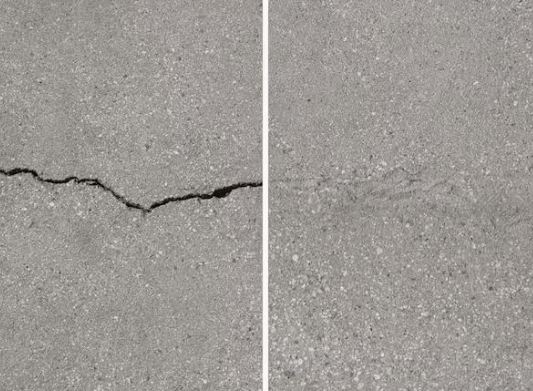
- Slab degradation — surface wear and impact damage accelerate without a protective layer, leading to spalling, cracking, and expensive repairs
None of these line items show up as one big invoice. They show up as a hundred small ones, plus a culture of "that's just how warehouse floors are." It doesn't have to be.
The Floor Coating Options Spartanburg Warehouses Are Choosing
1. Polished Concrete
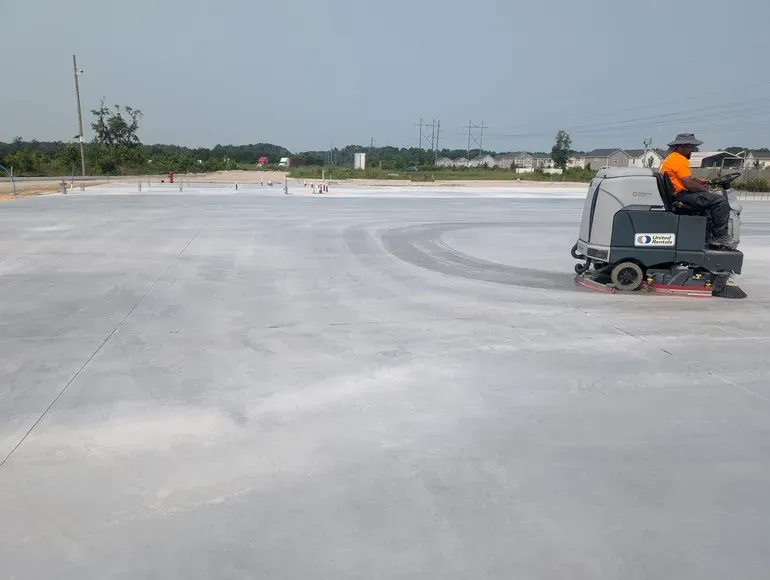
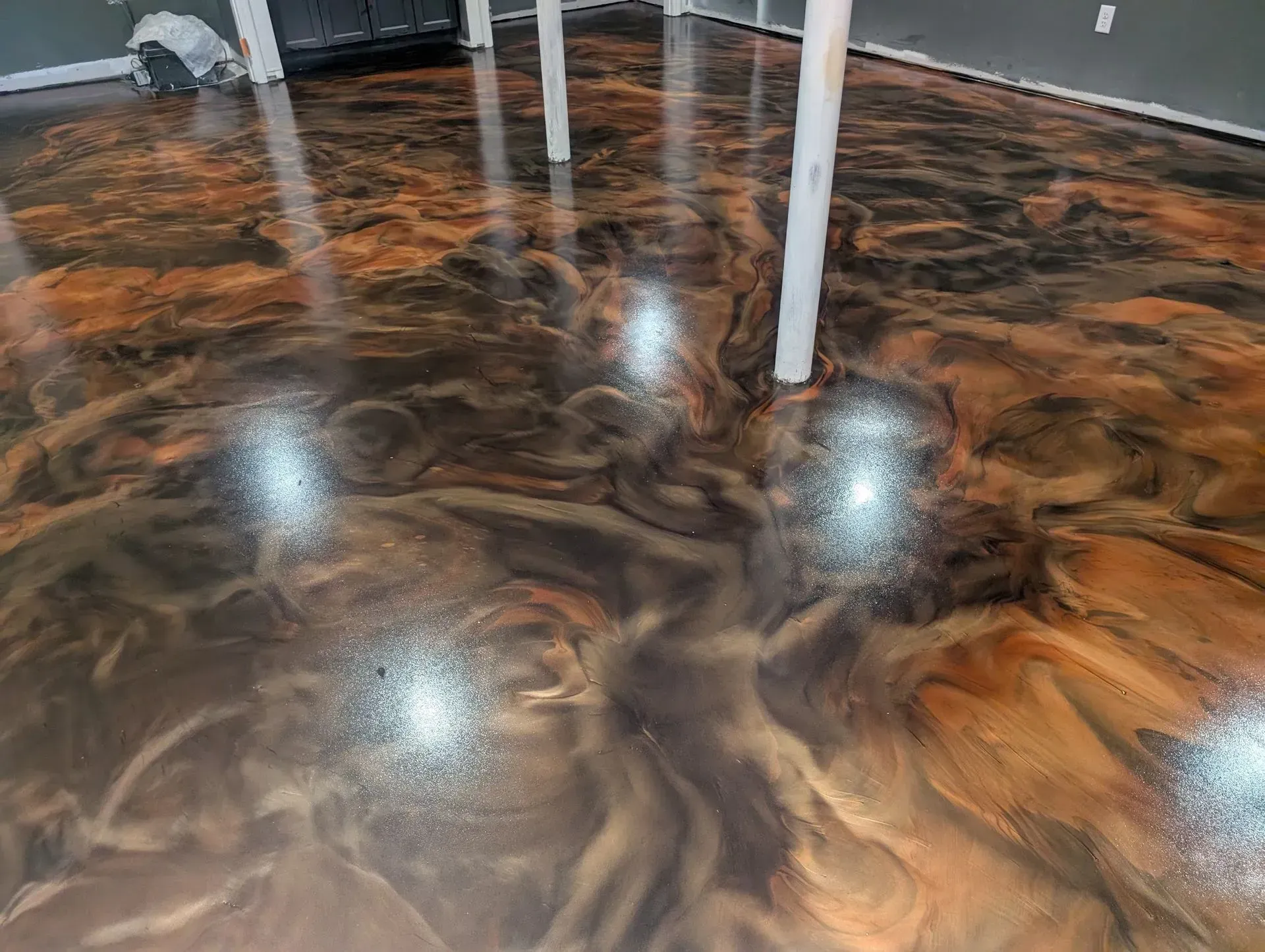
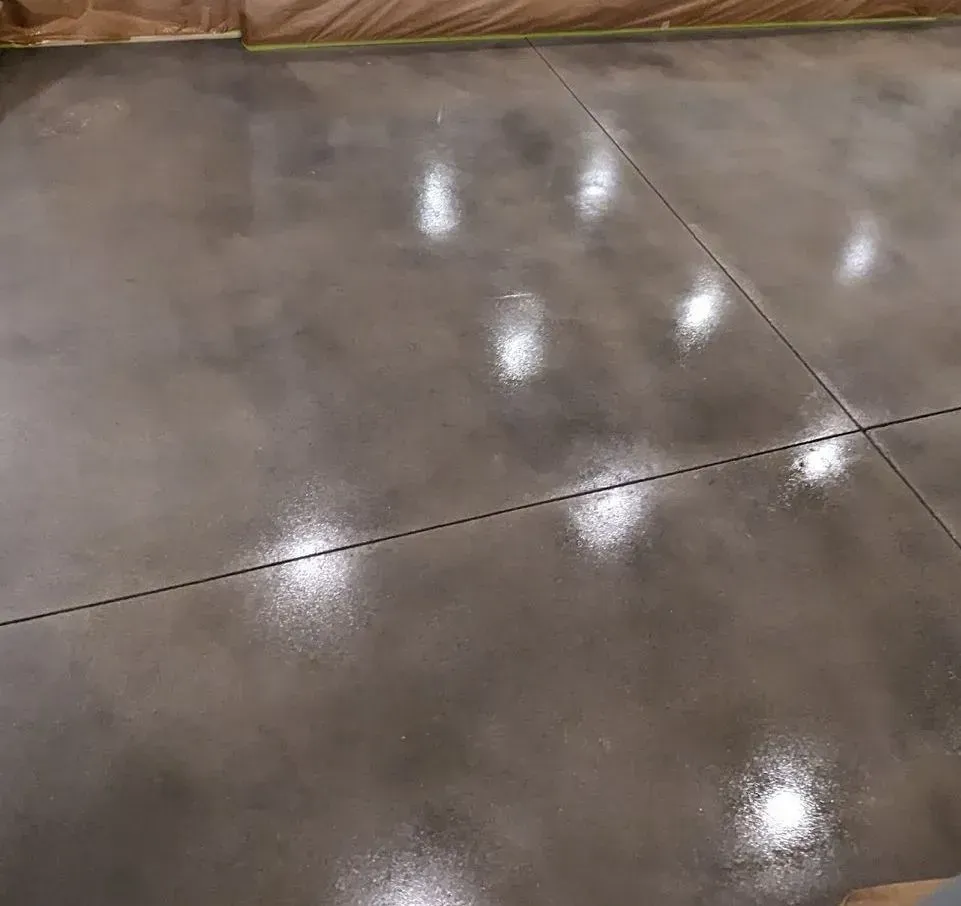
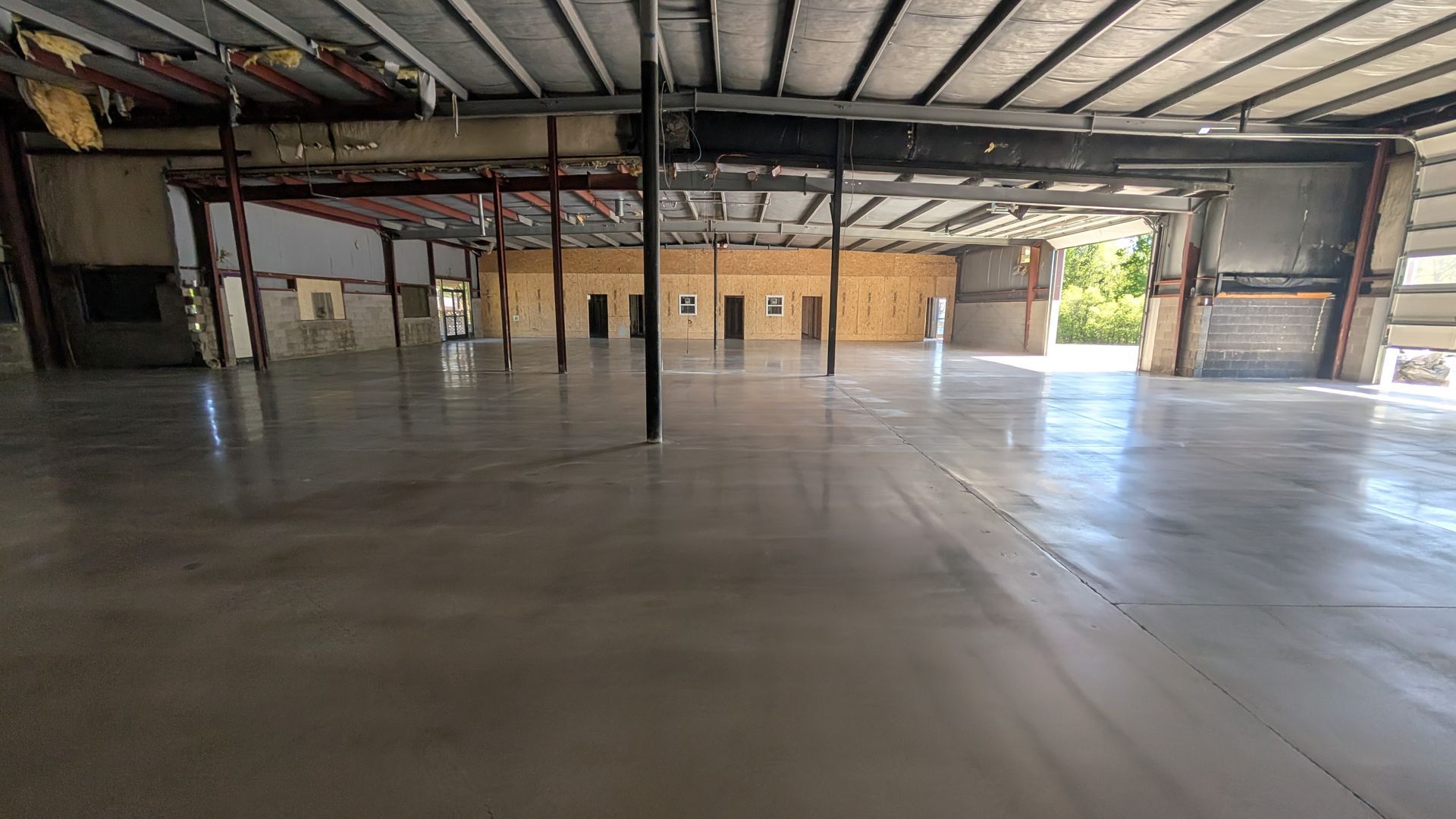
For most warehouse floors, polished concrete is the highest-ROI option. We diamond grind the existing slab through progressive grits, densify it chemically to harden the surface, then polish to the desired sheen. The result is a hard, dust-free, reflective floor that requires almost no maintenance and lasts for decades.
Our commercial concrete polishing work is the most common warehouse upgrade we do. It uses the slab you already have, doesn't add height (so racking and dock heights don't change), and pays back through lighting savings, reduced dust, and easier cleaning alone.
2. Dustproofing and Sealing
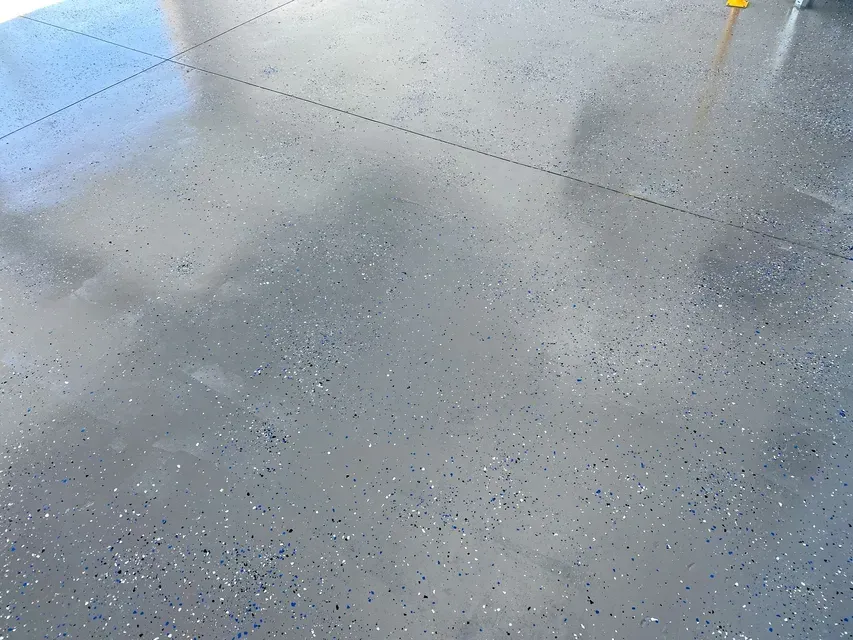
If polish isn't in the budget or the slab condition doesn't justify it, a high-quality lithium or sodium silicate densifier with a topical sealer is the next step. It locks down concrete dust, repels stains, and dramatically improves cleanability — at a lower price point than full polish. Our commercial concrete dustproofing and sealing service is what we recommend when the goal is dust control and stain resistance without the full polish process.
3. Epoxy or Urethane Cement for Specific Zones
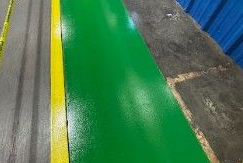
Production lines, battery rooms, packaging zones, and chemical storage areas often need more than polish. For these targeted zones, an epoxy or urethane cement coating handles spills, thermal cycling, and chemical exposure that polish alone can't. We commonly do hybrid projects — polished concrete in the main warehouse, epoxy or urethane cement in the specialty zones.
Where the ROI Actually Comes From
"ROI on a floor coating" sounds vague until you break it into the real categories.
Lighting Costs
A polished, reflective floor bounces 30-40% more light back into the space than dark, dusty concrete. Most warehouses can drop the number of fixtures, the wattage, or both — and the savings show up on every electric bill from then on. For a 50,000 sq ft warehouse, that adds up fast.
Cleaning and Maintenance
Bare warehouse floors require constant sweeping and dust mitigation. A polished or sealed floor needs little more than periodic auto-scrubbing. Most facilities we work with cut floor maintenance hours by half or more after upgrading.
Forklift Tire and Equipment Life
Smoother floors mean less wear on forklift tires, wheels, and suspensions. It also means faster, more confident operator movement — small per-trip gains that compound across thousands of trips per week.
Product and Air Quality
Concrete dust on packaging is a problem for food, pharma, electronics, and any product that has to look clean when it ships. Dust in the air is an OSHA and worker-safety problem nobody wants. Sealing the floor solves both at once.
Safety and Liability
A clean, well-marked, properly finished floor reduces slip-and-fall risk, makes aisles and zones easier to enforce, and signals to OSHA inspectors and visiting clients that you run a real operation.
A Real Example: 135,000 Sq Ft Storage Facility
One of our larger commercial projects was a 135,000 sq ft storage facility in Goose Creek, SC. The scope was a full slab finishing and sealing system across the entire footprint — the kind of project that gives us a clear read on how floor work pays back at scale.
The before-and-after on a project that size is the most honest argument for warehouse floor upgrades there is. You can see the difference walking the building, you can feel it in the forklift cab, and you can measure it in the operating costs. We've brought the same approach to facilities across the Upstate, scaled up or down to fit the building.
What Spartanburg Warehouse Owners Should Look For
Not all "warehouse floor coating" contractors are equipped for this kind of work. A few things to verify before you sign:
- Equipment for industrial-scale diamond grinding (not residential-grade rentals)
- Experience with phased work in operating facilities — production rarely stops for the floor
- Understanding of warehouse loads, joint patterns, and racking footprints
- Real references from similar-scale industrial work
- A written scope that addresses surface prep, densification, sealing, and joint treatment specifically
Our warehouse flooring page covers more about how we approach this kind of project, and our industrial concrete flooring work includes the heavier-duty systems for production zones.
Get a Free Estimate for Your Spartanburg Warehouse Floor
Whether you're managing a 10,000 sq ft distribution center off I-85 or a 200,000 sq ft fulfillment operation, the floor under it is doing more or less work for you depending on what's on it. We'd be happy to walk it with you and give you a real read on what an upgrade would cost and what it would pay back.
Give Zach a call at (864) 770-8608 or reach out through our contact page. On-site consultations are free across Spartanburg, Greenville, and the broader Upstate.