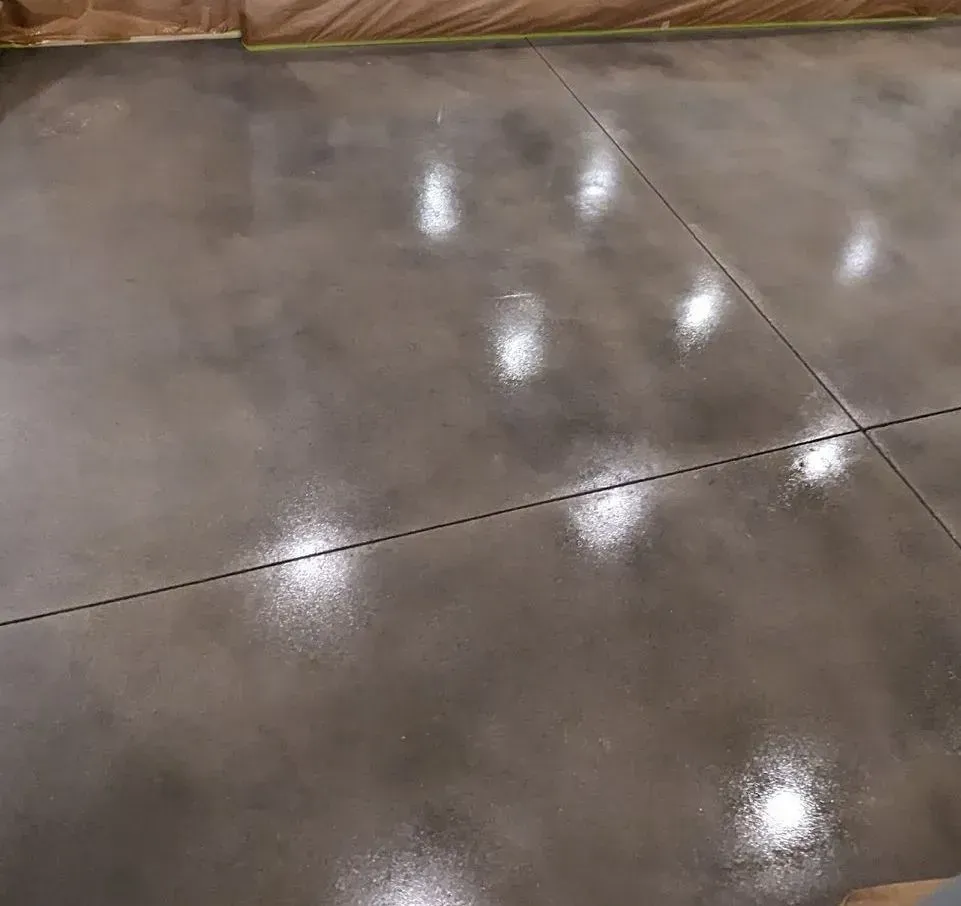
Polished Concrete the Right Choice for Greenville Restaurants and Cafés
Why Polished Concrete Is the Right Choice for Greenville Restaurants and Cafés
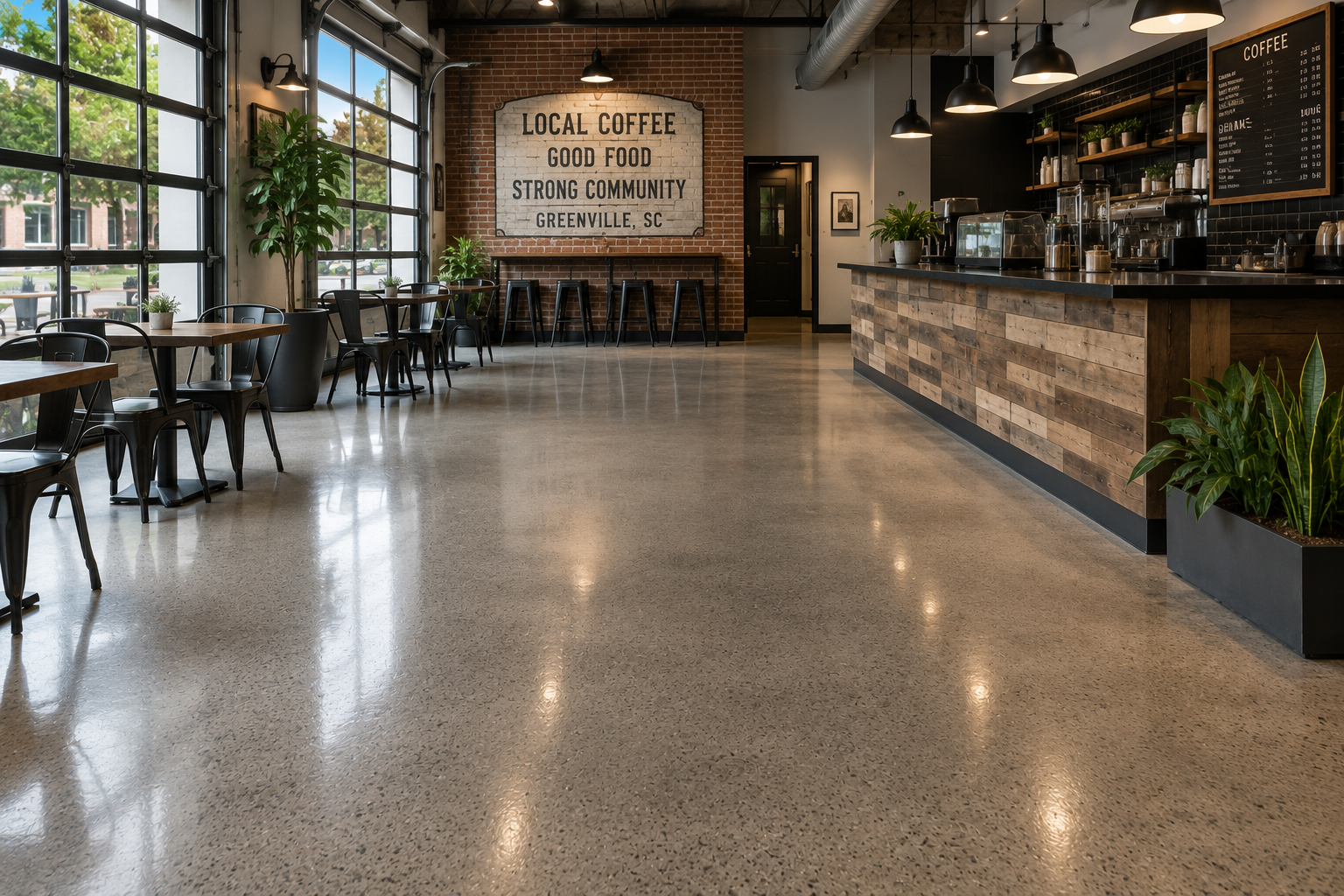
Walk through downtown Greenville, the Village of West Greenville, or any of the new restaurant rows in Greer, Travelers Rest, and Simpsonville, and you'll notice something: the floors. More and more restaurants and cafés in the Upstate are skipping vinyl tile, ceramic, and wood, and going with polished concrete instead.
It's not a trend so much as an obvious answer to the question every restaurant owner asks: what floor can survive my business, look great, and not cost me a fortune to maintain?
Polished concrete checks all three boxes. Here's why we recommend it for so many Greenville restaurant projects, and the cases where it isn't the right call.
Why Restaurants Are a Tough Floor Environment
A restaurant floor takes more abuse than most owners realize until they're three years in:
Heavy foot traffic — peak service hours can put hundreds of people through a small footprint every day
Constant spills — food, drinks, sauces, water, wine, beer, coffee, oil — every single shift
Wheeled equipment — bussing carts, kegs, hand trucks, and rolling prep equipment
Daily wet cleaning — mops, scrubbers, and disinfectants on every surface, every closing shift
Grease tracking — kitchen floors are the obvious problem, but front-of-house picks up grease too
Health inspections — floors have to be cleanable to a standard most other commercial floors don't
Tile cracks. Vinyl seams lift. Wood warps and stains. Most flooring options that look great on opening day look tired within 18 months under real restaurant use.
Why Polished Concrete Works
1. It Doesn't Wear Out the Way Other Floors Do
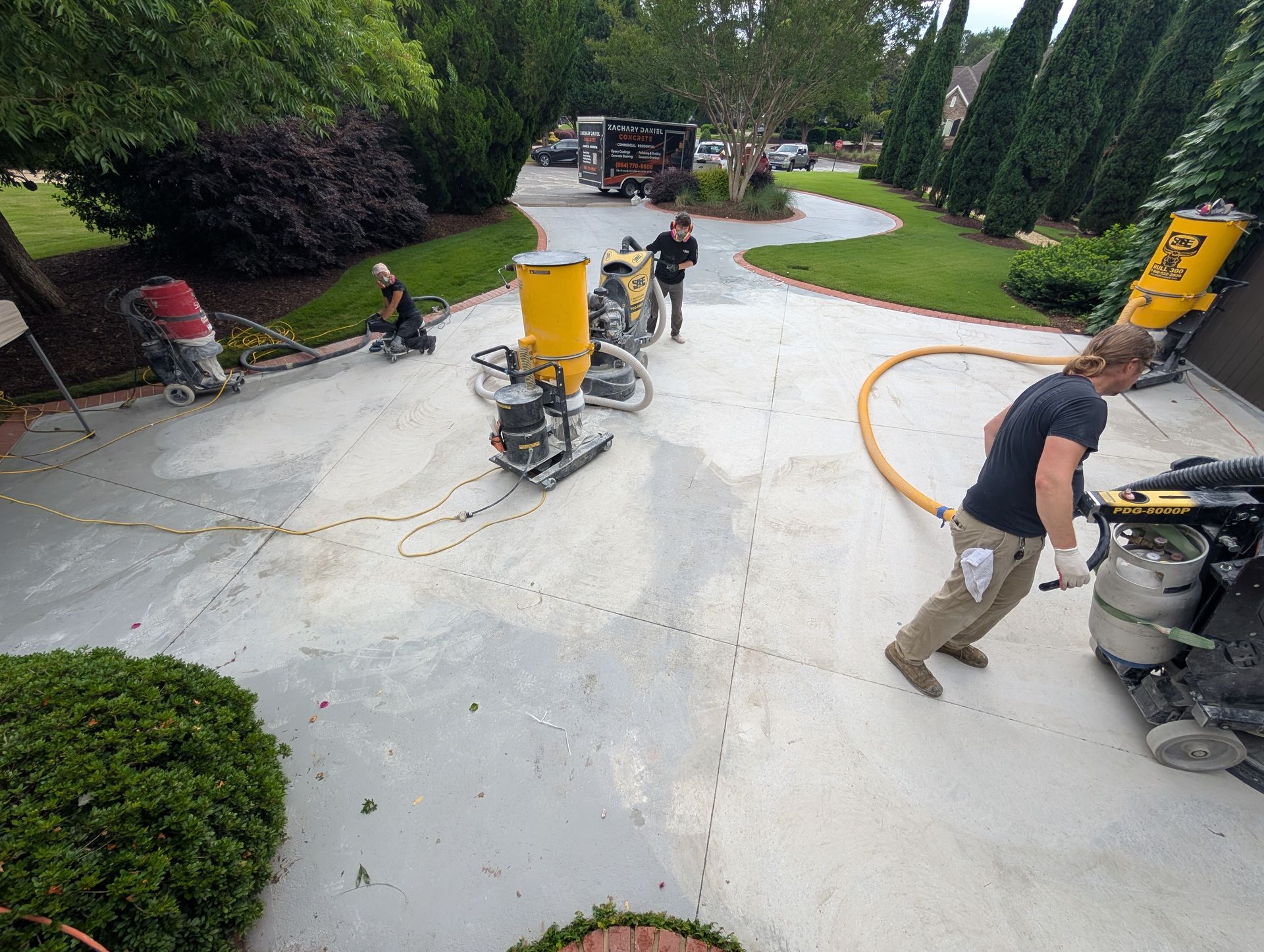
Polished concrete is the slab itself, refined and densified. There's no coating to scratch through, no grout to stain, no seams to lift. It can scuff and lose sheen over time, but a periodic re-burnish brings it back. Most polished concrete restaurant floors look better at year 10 than tile or vinyl looks at year 3.
Our commercial concrete polishing work in food-service spaces uses sealing systems rated for the acidic spills and aggressive cleaning that restaurants actually deal with.
2. It's Easy to Clean
One of the most underrated benefits. A polished concrete floor cleans with a damp mop and an occasional auto-scrub. No grout to scrub. No sealer to reapply on a schedule. No special wax cycle. Closing shift gets shorter. Maintenance costs drop.
3. It Fits the Aesthetic
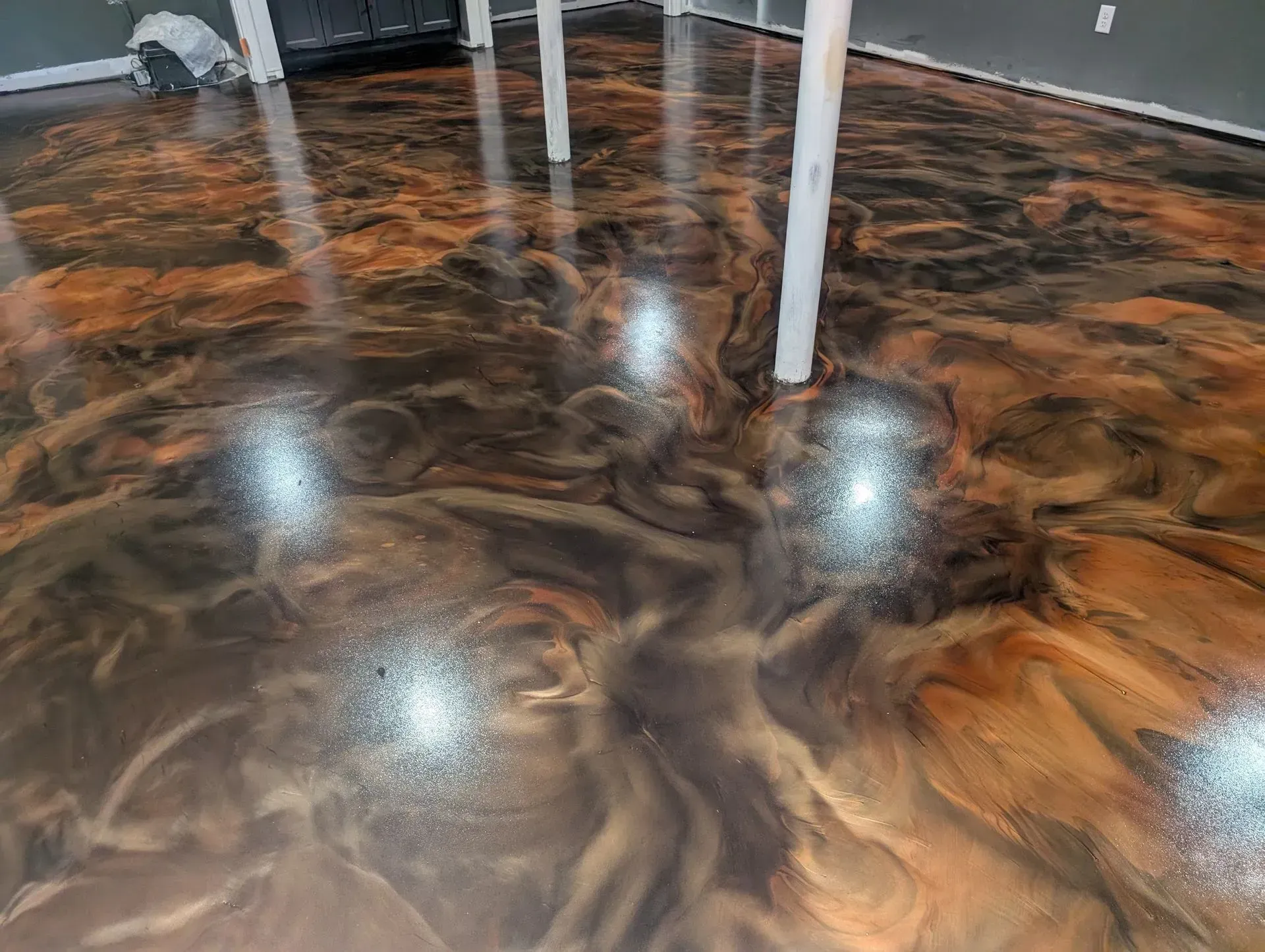
The look most Greenville restaurants and cafés are going for — modern, industrial-chic, slightly raw, locally-rooted — is exactly the look polished concrete delivers. You can add dye or stain to shift the color toward warm gray, espresso, or earthy tones. You can pick the gloss level from matte to high-shine. The result reads as intentional, not generic.
Sheet vinyl that's trying to look like wood reads as sheet vinyl trying to look like wood. Real polished concrete reads as the floor the building came with — which, after we finish it, is exactly what it is.
4. It's Comfortable Under Long Shifts
Polished concrete is slightly softer underfoot than ceramic tile (which has zero give) and gives a more uniform walking surface than worn vinyl. For staff who are on their feet 8-12 hours, that matters more than owners often realize. Add proper anti-fatigue mats at stations and the all-day standing experience is noticeably better than on tile.
5. It Reflects Light
Polished concrete bounces light around the space. Most restaurants design with intentional lighting — pendant fixtures, accent lighting, candles — and a reflective floor amplifies all of it. The room feels warmer and more inviting without adding fixtures.
Front of House vs. Back of House
Polished concrete is the right answer for most of the front-of-house: dining room, bar, host area, hallways, restrooms. It's beautiful, it's tough, and it handles the abuse.
The back of house is a different question. Commercial kitchens, dish pits, walk-in coolers, and any zone with constant standing water or hot grease usually need something more aggressive than polished concrete. That's where urethane cement or chemical-resistant epoxy comes in — same systems we use for breweries and food production. Our commercial kitchen flooring page covers what fits behind the line.
Many of the restaurant projects we work on are hybrid: polished concrete out front, urethane cement or heavy-duty epoxy in the kitchen. Same contractor, same project, two different systems matched to two different demands.
What Polished Concrete Costs in a Greenville Restaurant
For a typical Upstate restaurant project, polished concrete in dining and front-of-house areas usually runs between $6 and $10 per square foot, depending on slab condition, gloss level, and whether dye or stain is part of the spec. A 2,000 sq ft dining room is a $12,000-$20,000 floor.
That's competitive with mid-range tile or quality LVT — and significantly cheaper over a 10-year window once you factor in maintenance, replacement, and the inevitable failures of cheaper options.
Our commercial concrete coatings options also include sealed-and-dyed alternatives if a full polish isn't in budget. The look is similar, the durability is slightly less, and the price comes down.
When Polished Concrete Isn't the Right Call
A few cases where we steer restaurants away from polished concrete:
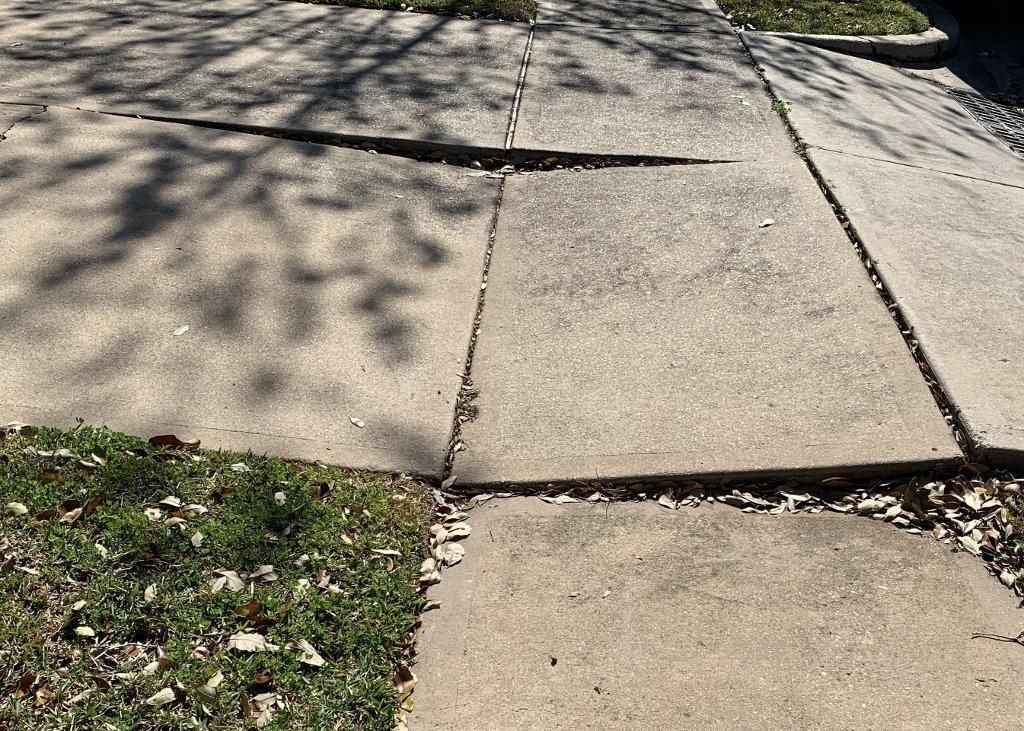
The slab is in really bad shape — heavily cracked, spalled, or repaired in ways that won't polish out. We can sometimes fix it with an overlay first, but it changes the economics.
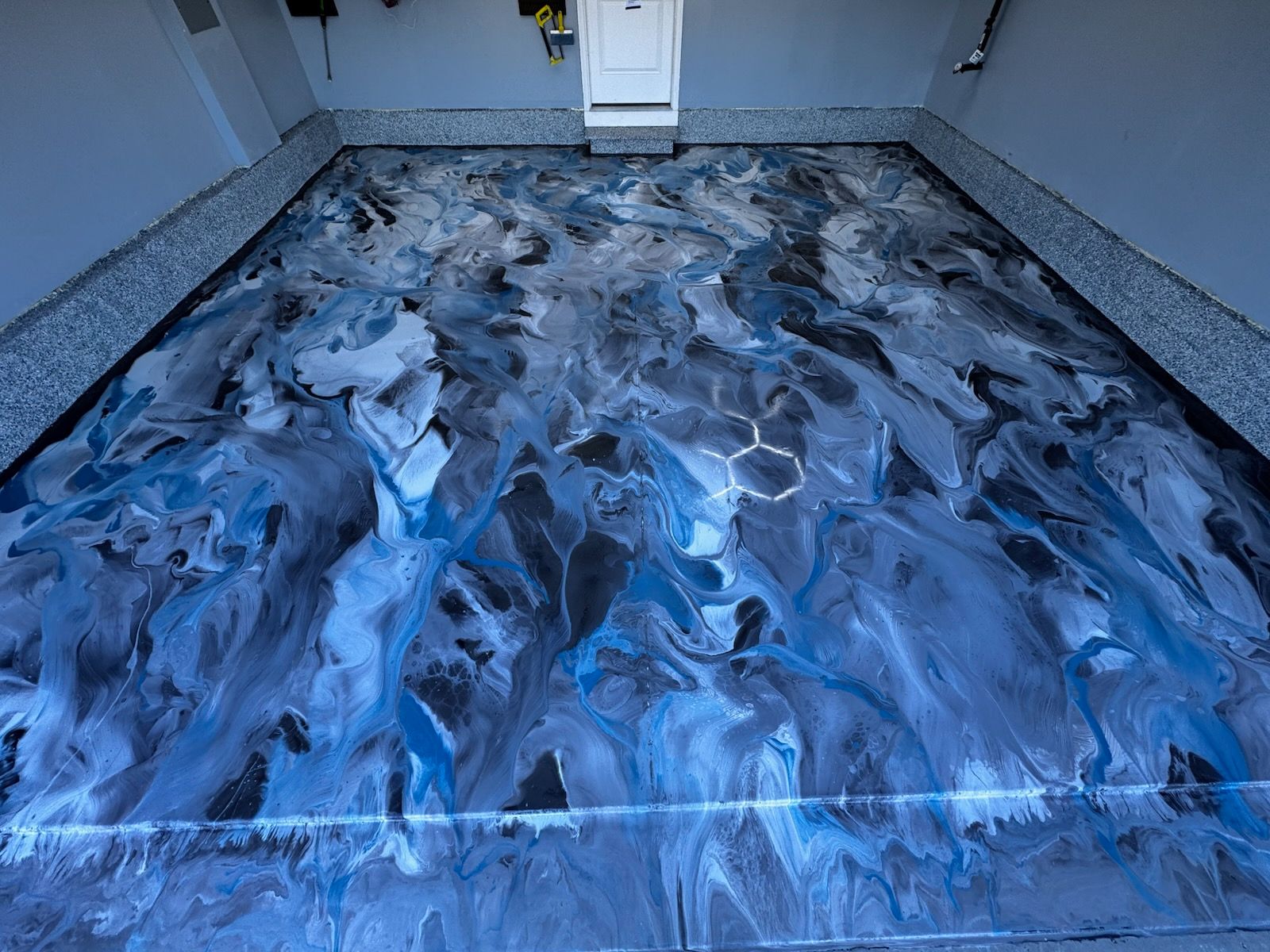
The space needs a specific color exactly matched to brand — polished concrete takes color but never as predictably as an epoxy system. If exact color is non-negotiable, decorative epoxy is better.
Sound is a major concern — concrete is hard, and sound bounces. Most restaurants want this for the energy, but a fine-dining concept might want acoustic treatment to compensate.
Existing slab has serious moisture issues — has to be diagnosed and addressed first regardless of finish system.
How ZDC Approaches Restaurant Floors in the Upstate
We've worked on restaurant and café floors across Greenville, Greer, Spartanburg, Travelers Rest, and surrounding areas. The conversation is always the same: what's the aesthetic, what's the operational demand, what's the budget, and what's the slab actually like under the existing flooring.
From there, we'll recommend the right system — usually polished concrete for the public areas, with the appropriate spec for the kitchen. We can phase the work around tight construction schedules and we know how to install systems that hit the cure times restaurants need to open on time.
Get a Free Estimate for Your Greenville Restaurant Floor
If you're opening a new restaurant in the Upstate, remodeling an existing one, or planning a build-out, the floor is one of the bigger calls you'll make. We'd be happy to walk the space with you and talk through what fits.
Give Zach a call at (864) 770-8608 or reach out through our contact page. On-site consultations are free across Greenville and the Upstate.