Concrete Staining vs. Epoxy Coating: Which Is Right for Your Greenville Home?
If you're a Greenville homeowner looking at finishing a concrete floor — garage, basement, patio, or main-floor living space — you've probably run into two opciones over and over: concrete staining or epoxy coating. Both take a plain gray slab and turn it into a finished floor. Both are durable. Both are common. And they're not the same product at all.


Which one is right for your space depends on where the floor is, what it has to handle, how you want it to look, and how much you want to spend now vs. later. Here's how we walk Greenville homeowners through the decision.


What Each One Actually Is

The two systems get lumped together as "finished concrete," but they work completely differently.

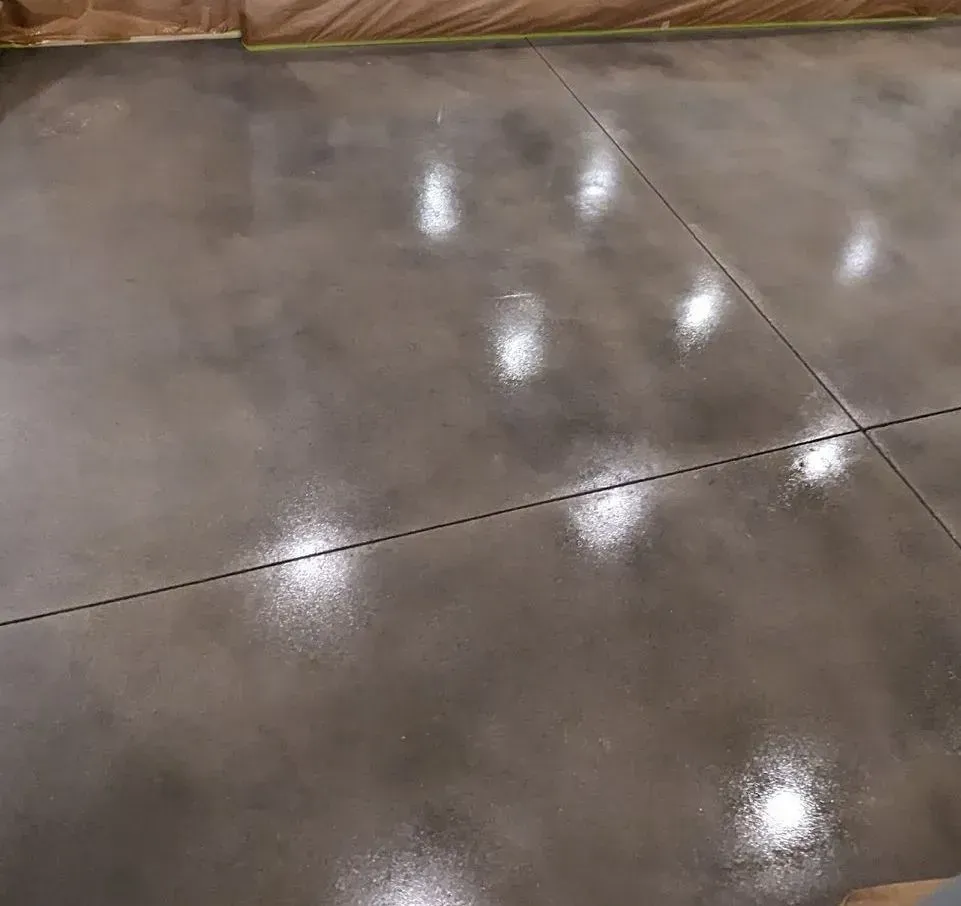
Concrete staining adds color to your existing slab and seals it. The concrete stays concrete — we grind the surface, apply acid stain or water-based stain to add color, and finish with a clear sealer. The result is a colored, sealed concrete floor with the texture and character of the original slab showing through.


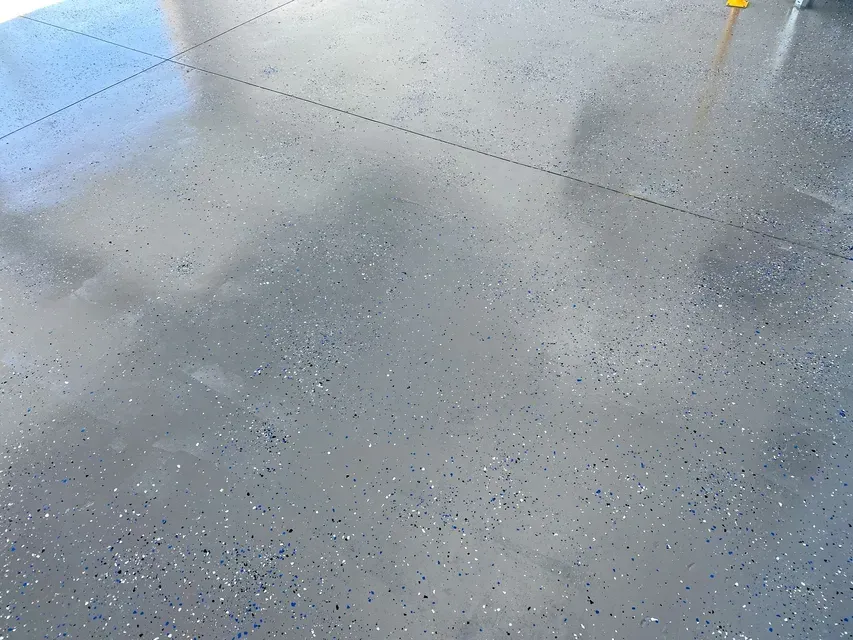
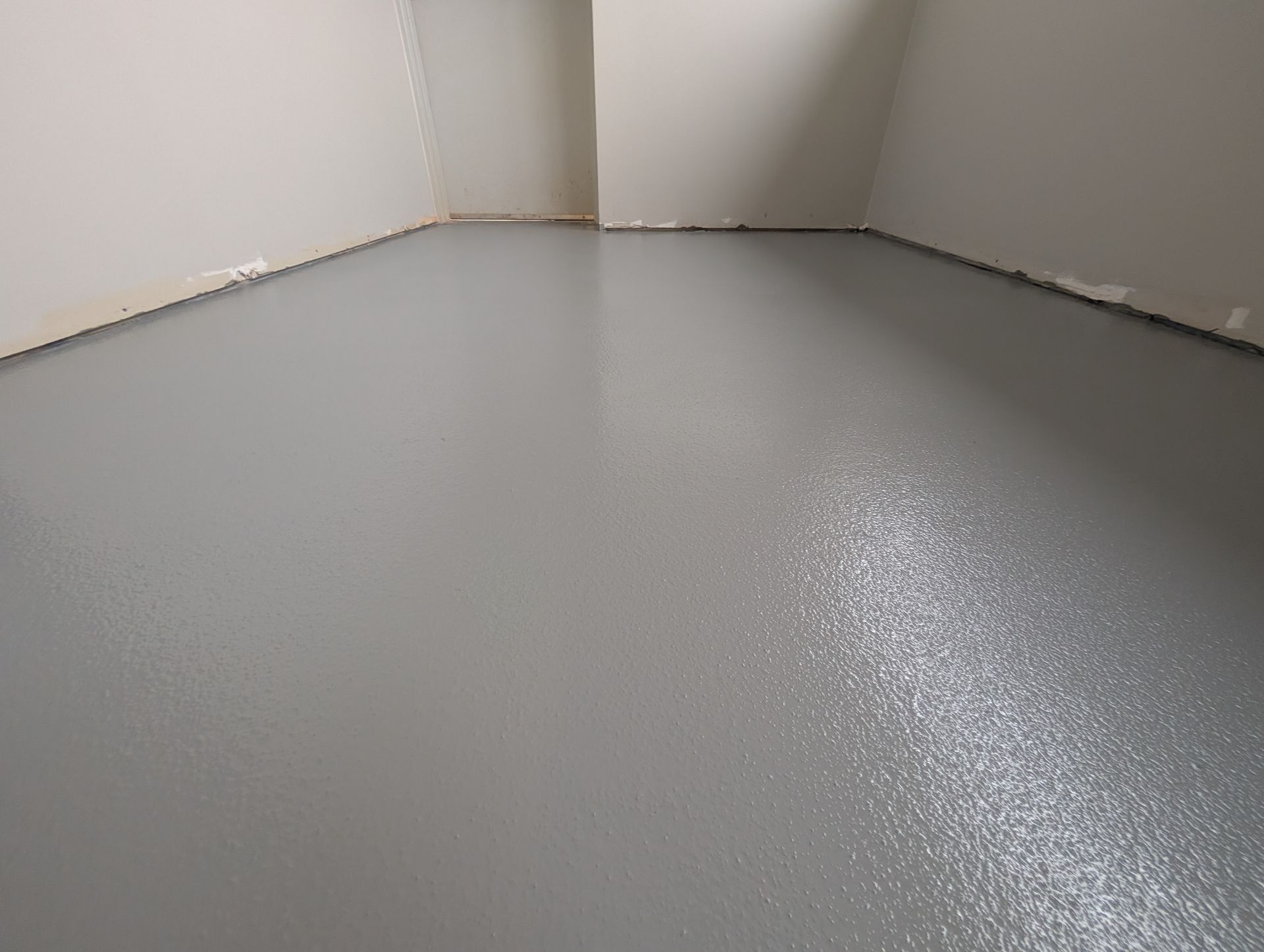
Epoxy coating is a separate material applied over the slab. Multi-layer system: primer, base coat, optional flake or metallic effect, and a clear topcoat. The epoxy sits on top of the concrete as a continuous film. What you see is the coating, not the slab underneath.

That difference — dyed concrete vs. a coating on top — shapes every other comparison.


Durability: What Actually Holds Up

Both systems are durable, but they're built for different kinds of abuse.

Concrete staining is essentially indestructible where it counts — you can't scratch through it because there's no coating to scratch through. Sealer wears over time, but the color underneath doesn't go anywhere. The worst case is usually re-sealing every 3-5 years to keep the sheen and stain protection intact.

Epoxy is harder-wearing in the short term. A good residential epoxy system resists impact, chemicals, and moisture better than a sealed stained floor. But epoxy also fails more visibly when it fails — chips, hot tire pickup, delamination, or yellowing. A worn stained floor still looks like a stained floor. A worn epoxy floor looks like it needs to be redone.

For garages with hot tire traffic, oil spills, and dropped tools, our garage floor epoxy coating is the more common recommendation. For interior living spaces and patios, staining usually wins.


Maintenance: What You'll Actually Do

Stained concrete is the lower-maintenance long-term winner. Damp mop for daily cleaning, re-seal every few years. That's it. No wax, no re-coating schedule, no tricky spot repairs.

Epoxy is also low-maintenance day-to-day, but the topcoat is a wear layer. In a busy garage or a heavily-used basement, the topcoat may need refreshing every 5-8 years to keep the floor looking new. It's not expensive to refresh — but it's a recurring cost that staining doesn't have.

If your goal is "finish it and forget it," staining edges ahead. If your goal is "maximum toughness against garage abuse," epoxy is worth the refresh cycle.


The Look: Aesthetic Differences

Very different visual results, even when they're the same color.

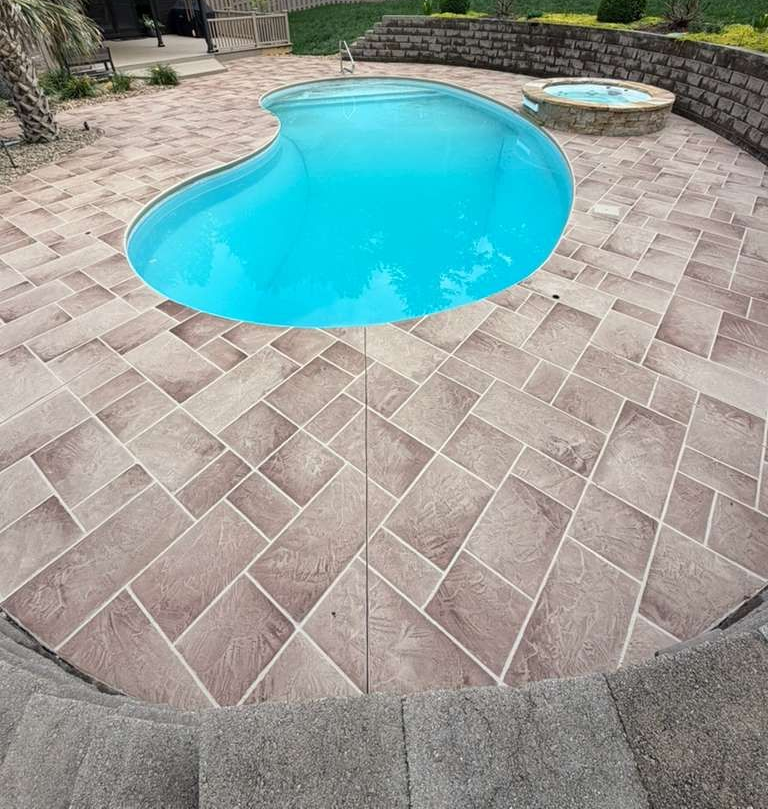
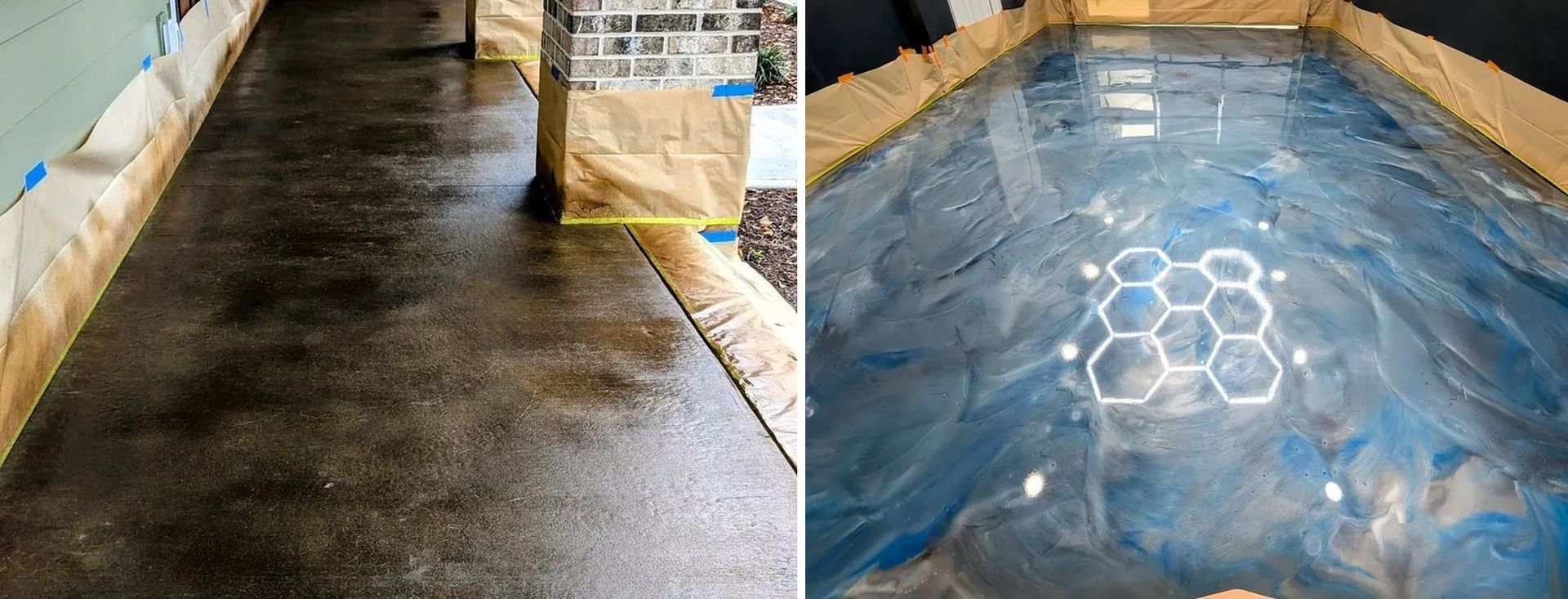
Stained concrete has a natural, slightly mottled, layered look. You see the character of the original slab — trowel marks, aggregate variation, edges. Acid stain in particular creates a rich, marbled effect that looks organic and slightly different everywhere. Water-based stain is more uniform but still shows the underlying concrete.

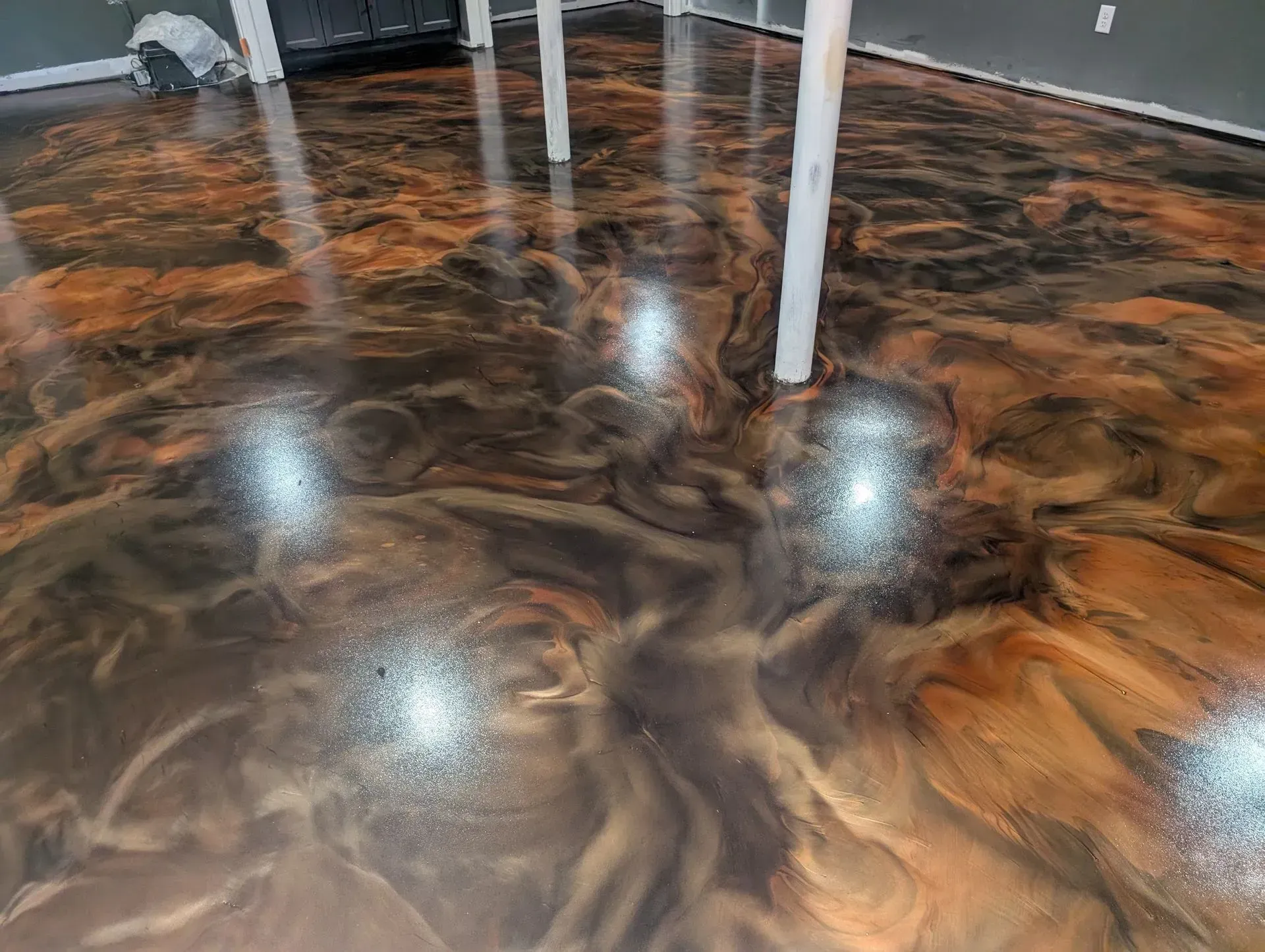
Epoxy is more uniform, more designed. Solid color, flake, metallic — the result looks intentional and manufactured (in a good way). Metallic epoxy creates a swirling, liquid-looking finish that's popular in modern garages and basements. You get exact color control that staining can't match.

Neither is "better." A rustic patio with acid-stained concrete belongs. A sleek finished basement with metallic epoxy belongs too. The right pick depends on the aesthetic you want.

Our concrete staining work covers acid and water-based systems in a wide color range for homeowners who want the natural concrete look elevated.


Where Each One Wins by Room

Garage

Winner: epoxy in most cases. Hot tires, dropped tools, oil, and chemical spills favor a coating built to handle them. Full broadcast flake with a chemical-resistant topcoat is the standard. Staining is possible but usually doesn't hold up as well in a working garage.

Basement

Winner: either, depends on use. A finished basement living space works beautifully with stained concrete — softer look, warmer feel, easier to blend with the rest of the home. A basement workshop or storage area often does better with epoxy for the chemical and impact resistance.

Patio and Outdoor Concrete

Winner: staining, almost always. UV exposure destroys most epoxy topcoats over a few years — yellowing, peeling, chalking. Stained concrete with a UV-stable outdoor sealer handles direct sun without breaking down. This is the clearest case in the whole comparison.

Main-Floor Living Space

Winner: staining or polish. Interior living spaces call for a look that reads as intentional and warm. Staining paired with a satin sealer, or polished concrete with dye, are the go-to systems. Epoxy in a living room or kitchen usually looks too shiny and too industrial.

Laundry Room, Mudroom, Utility Areas

Winner: epoxy. Wet feet, cleaning chemicals, salt from winter shoes, dropped equipment — epoxy handles all of it and stays easy to clean.


Cost: What Homeowners Should Expect

For most residential projects in the Upstate:

  • Concrete staining — $3 to $7 per square foot depending on stain system and prep required
  • Basic residential epoxy (solid color) — $4 to $7 per square foot
  • Full broadcast flake epoxy system — $6 to $10 per square foot
  • Metallic epoxy — $8 to $12 per square foot

For a typical 400-500 sq ft garage or basement, that puts most stained-floor projects between $1,500 and $3,500, and most quality epoxy projects between $2,500 and $5,000. Metallic finishes and complex prep push higher.


Common Homeowner Mistakes

A few things we see homeowners get wrong when picking between the two:

  • Buying a big-box epoxy kit for a garage floor — those DIY kits fail within 12-18 months under real garage use. Wrong product for the environment.
  • Using stain on a slab with old paint or coating residue — stain won't bond properly to contaminated concrete. Prep is non-negotiable.
  • Expecting stain to hide slab damage — stain shows what's underneath. If the slab is cracked or patched, staining will highlight it, not hide it. Epoxy is usually the better choice for a beat-up slab.
  • Picking the wrong sealer for outdoor stained concrete — interior sealers fail under UV. Outdoor projects need outdoor-rated sealers exclusively.

Our concrete sealing systems for stained floors are matched to the environment — interior, garage, or outdoor.


How ZDC Helps Greenville Homeowners Decide

We work on residential floors across Greenville, Greer, Mauldin, Simpsonville, and Travelers Rest, and we handle both stained and epoxy systems. We'd rather recommend the right one for your specific project than sell you the more expensive option — most homeowners end up with a mix across the house (stain for the patio, epoxy for the garage, polish or stain for the main floor).


Get a Free Estimate for Your Greenville Home

Give Zach a call at (864) 770-8608 or reach out through our contact page. On-site consultations are free across the Upstate. We'll walk your space, talk through both options, and send you a written estimate you can plan around.
 
August 19, 2026
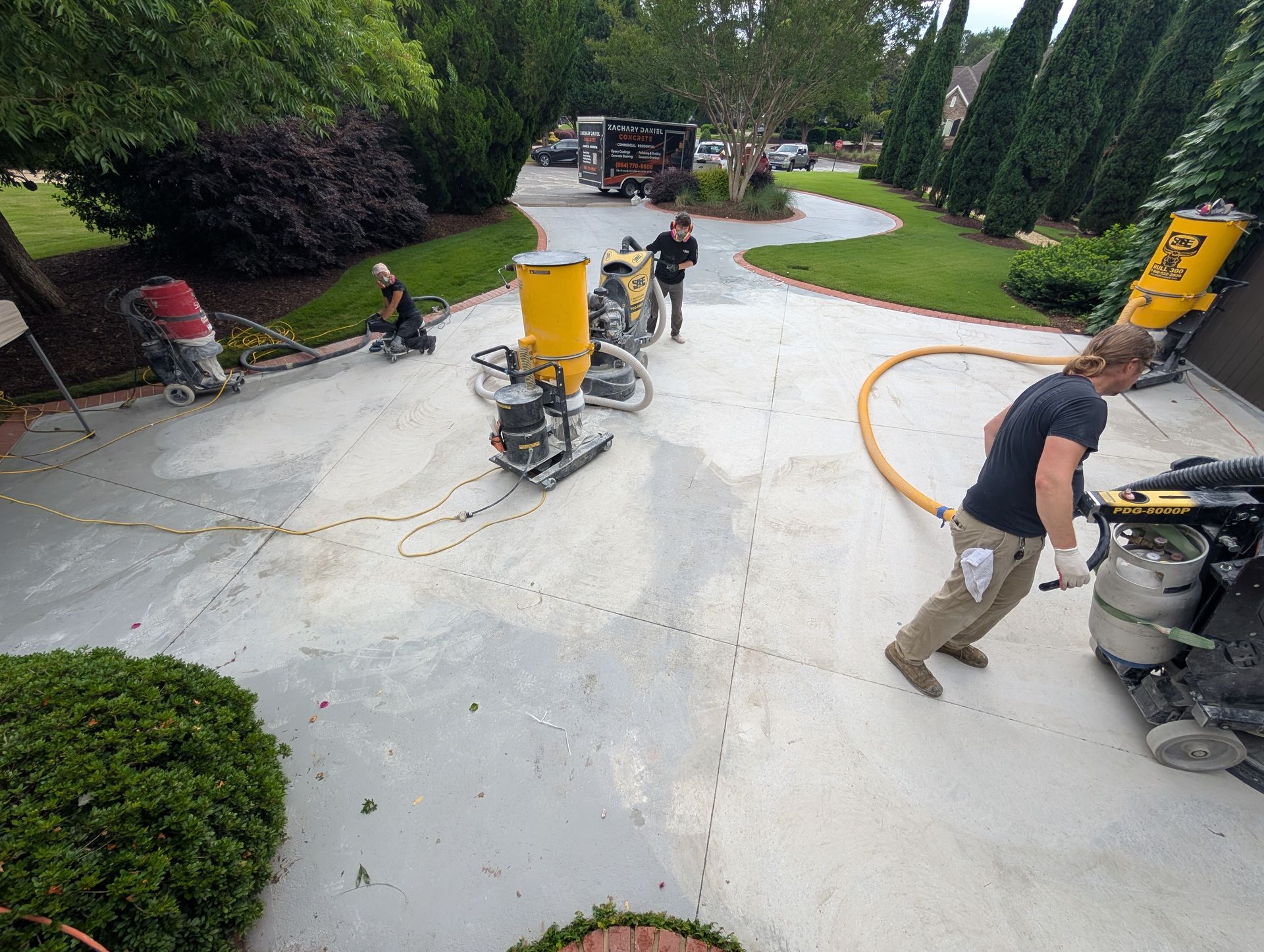
Concrete polishing has become the go-to floor upgrade for a huge range of Greenville buildings — retail stores, restaurants, warehouses, gyms, garages, basements, and increasingly, main-floor living spaces in modern homes. The look is clean and modern, the maintenance is minimal, and done right, the floor lasts decades. The question we get before almost every polishing project is the same: how much is this actually going to cost? Here's the honest answer for the Upstate market, broken down by the variables that actually move the price. No brochure numbers. No "starting at" pricing that doesn't reflect real projects. Just what Greenville homeowners and business owners should expect when they get quotes. The Range: $3 to $12 per Square Foot For most concrete polishing projects in Greenville, expect a per-square-foot price somewhere between $3 and $12 . That's a wide spread, and there's a reason — "concrete polishing" covers everything from a basic grind-and-seal on a warehouse slab to a fully aggregate-exposed, high-gloss finish in a boutique retail space. Same name, very different work. Broadly: Grind and seal (basic) — $3 to $5 per sq ft Standard polish, cream finish (satin/matte) — $5 to $8 per sq ft Salt-and-pepper polish (light aggregate exposure) — $7 to $10 per sq ft Full aggregate exposure, high-gloss polish — $9 to $12+ per sq ft Those ranges assume a slab in decent condition. Slabs that need major repair, moisture mitigation, or coating removal push higher. What Actually Moves the Price 1. Level of Polish The single biggest factor. Polishing concrete is a multi-step process using progressively finer diamond grits. The more steps we take, the higher the gloss and the more of the aggregate we expose — and the higher the price. Grind and seal — quick grind, densifier, sealer. Matte finish. Cheapest option, good for warehouses and utility spaces. Cream polish — polished at the cement paste level. Smooth, uniform, satin-to-gloss. The most common finish for retail, offices, homes. Salt-and-pepper polish — grind slightly deeper to expose the small aggregate near the surface. More texture, more character. Full aggregate exposure — grind deep enough to expose the larger stone in the slab. Dramatic, high-end look. More labor, more diamond wear, higher price. Our commercial concrete polishing work covers all four levels — the right one depends on how you want the floor to look and how it'll be used. 2. Slab Condition A clean, sound, level slab polishes fast. A slab with cracks, spalling, old coatings, oil contamination, or major surface repairs needs work before polishing can start. Coating removal alone can add $1-$3 per sq ft. Crack repair, joint filling, and patching all add up. This is where the biggest surprise cost usually shows up. A quote based on a bare slab is different from a quote based on the reality of a slab under 20-year-old vinyl tile. 3. Residential vs Commercial Small residential projects almost always cost more per square foot than large commercial jobs. A 500 sq ft basement polish carries all the mobilization, prep, and equipment overhead of a bigger job — spread over fewer square feet. A 30,000 sq ft warehouse spreads the same overhead much further. Practically, that means residential basements, garages, and main-floor projects typically fall in the $6 to $12 per sq ft range, while large commercial polishing lands closer to $3 to $7 per sq ft . 4. Color and Dye Standard polish is the natural gray of the concrete. Adding dye — during the polishing process — to shift the color toward warm gray, espresso, charcoal, or an earth tone adds cost, usually $1-$2 per sq ft. Not dramatic, but real. 5. Site Access and Scheduling Off-hours work, phased installation in operating businesses, upstairs floors requiring equipment carrying, and tight schedules all affect price. A polish job we can knock out in three uninterrupted days costs less than the same scope done overnight across a week. What a Real Greenville Project Costs To make it concrete, here's how typical Upstate projects tend to land: 500 sq ft residential basement , cream polish, dye added — $3,500 to $5,500 400 sq ft garage floor , salt-and-pepper polish — $3,000 to $4,500 2,000 sq ft main-floor open living space , cream polish — $10,000 to $16,000 2,500 sq ft retail store , cream polish with dye — $15,000 to $22,000 15,000 sq ft warehouse , grind and seal — $45,000 to $70,000 50,000 sq ft distribution facility , cream polish — $175,000 to $275,000 These are real ranges, not quotes. Every slab is different, and the only way to know your number is to have us walk it. Where Cheap Quotes Get Expensive The Upstate polishing market has a range of quality. We get called in regularly to fix polish jobs that another contractor did the wrong way — underground concrete, cheap tooling, skipped densification, wrong sealer. The pattern: Grind and seal sold as "polished concrete" — buyer expected a real polish, got a matte grind with sealer. Not the same product. Insufficient grit progression — the polish looks OK for a few months, then loses sheen fast because the surface was never actually refined. No or weak densification — polish is soft, wears through quickly, stains easily. Wrong sealer or none at all — floor absorbs stains within weeks and can't be recovered. Ask any contractor: what grit are you finishing at, what densifier are you using, what sealer, and how many passes. A quote that can't answer those clearly isn't really a polish quote. Our commercial concrete coatings options and polish specs are always written out so you know exactly what you're paying for. How to Get an Accurate Estimate The right way to budget for a polished concrete floor is an on-site walkthrough. We test the slab, talk through the finish level you want, discuss any prep required, and put together a written estimate that breaks out grinding, densification, polishing steps, dye if applicable, sealer, and any repair work. No vague line items, no surprises later. If the budget is tight, we can usually find a way to hit the visual you want at a lower spec — a cream polish instead of aggregate exposure, for example, or a sealed-and-densified concrete finish as an alternative path. Get a Free Estimate for Your Greenville Polishing Project Ready to see what your specific floor would cost? Give Zach a call at (864) 770-8608 or reach out through our contact page . On-site consultations and estimates are free across Greenville, Greer, Mauldin, Simpsonville, Spartanburg, and the broader Upstate.
August 12, 2026
Greenville's fitness scene has exploded. CrossFit boxes, boutique cycling studios, functional training gyms, yoga studios, and full-service commercial fitness centers have opened all across the Upstate in the last few years — Downtown, Woodruff Road, Greer, Simpsonville, and up into Travelers Rest. Every one of those owners has to answer the same question early in the build-out: what flooring will actually hold up? Dropped barbells, kettlebells hitting the deck, sled work, spin bikes, rowers being dragged around, and constant sweat wearing down the surface — a gym floor takes a specific kind of abuse most commercial spaces never see. Here's how we think about gym flooring at Zachary Daniel Concrete, and why more Greenville fitness studios are moving away from generic commercial rubber mats and toward finished concrete systems. Why Gym Floors Are a Unique Challenge  A fitness facility floor deals with a mix of stressors that don't show up together anywhere else: Impact loading — dropped Olympic bars, kettlebells, dumbbells, and slam balls create concentrated point loads that shatter tile and puncture cheap coatings Sweat and moisture — every class produces gallons of it, and unsealed surfaces absorb it, stain, and start to smell Chemical exposure — cleaning sprays, disinfectants, chalk, pre-workout residue, and rubber-mat off-gassing all interact with the floor daily Heavy equipment traffic — squat racks, rowers, and turf sleds get dragged across the floor constantly Slip risk — a wet floor at a boutique studio is a lawsuit waiting to happen Aesthetic and brand — the floor is one of the first things a prospective member sees on a tour Standard commercial rubber matting handles the impact fine but fails on the sweat, chemical, and aesthetic sides. Tile cracks. LVT lifts. Bare concrete stains and dusts. The right answer for most Greenville gyms is a finished concrete floor with rubber matting layered over it in specific zones — not one or the other. The Best Flooring Systems for Greenville Gyms 1. Polished Concrete as the Base Floor For most fitness facilities, polished concrete is the right foundation. We diamond grind the existing slab, densify it chemically, and polish it to a satin or matte finish. The result is a hard, sealed, easy-to-clean surface that handles sweat, disinfectants, and equipment traffic without breaking down. Our commercial concrete polishing work in fitness spaces uses sealer systems rated for acidic sweat exposure and daily wet cleaning. The floor also reflects light, which makes studios feel larger and brighter — a real win for boutique concepts where the aesthetic matters. Under drop zones (deadlift platforms, dumbbell areas, functional training turf), rubber tile or bonded rubber flooring goes over the top of the polish. The polished concrete underneath protects the slab and gives you a clean floor once the rubber is removed or reconfigured. 2. Full Broadcast Epoxy Flake System If the aesthetic goal is a more finished, colored, showroom-quality look — common in boutique studios and premium gym brands — a full broadcast epoxy flake system is the upgrade. Multi-layer install: primer, base coat, vinyl flake broadcast, chemical-resistant urethane topcoat. Slip-resistant additive built into the topcoat. Our commercial epoxy flooring systems can be color-matched to brand and installed in patterns for zone identification (cardio here, strength there, stretching over there). Works especially well in boutique and franchise fitness concepts where floor aesthetics are part of the marketing. 3. Sealed and Dyed Concrete for Budget-Conscious Builds If polish or full epoxy isn't in the budget, a densifier plus dye plus outdoor-rated sealer gets you 80% of the visual result at a lower price point. Not as hard-wearing as full polish, but sealed enough to handle sweat and cleaning, and colored enough to look intentional. Our commercial concrete coatings options include this tier for owners who need a finished floor without the polish price. Zone-by-Zone: What Goes Where Most gyms aren't one uniform floor — different zones have different needs: Free weight and drop zones — polished or sealed concrete underneath, rubber tile or bonded rubber over the top. The concrete protects the slab; the rubber protects the equipment and dampens sound. Turf and functional training — polished concrete underneath, athletic turf laid over. Turf can be removed or reconfigured without ruining the base floor. Cardio deck (treadmills, bikes, rowers) — polished concrete or full epoxy. No rubber needed. Easy to clean sweat off. Group fitness rooms (yoga, HIIT, boxing) — depends on the workout. Bare polished concrete for HIIT and boxing, cushioned overlay for yoga. Locker rooms, hallways, front desk — polished concrete or decorative epoxy. Sealed for sanitation and wet feet from showers. Reception and retail — where the brand aesthetic matters most. Decorative epoxy or a stained polished concrete floor. Getting the zoning right saves money — you don't over-spec the whole floor, and you don't under-spec the areas that get the most abuse. What to Watch Out For A few things that go wrong with gym floors we get called to fix: Residential-grade epoxy in a commercial gym — fails within 12-18 months under real fitness use. Wrong product for the environment. Unsealed concrete under rubber matting — sweat wicks under the rubber, gets trapped, and rots the underside of the mat over time. Also starts to smell. Wrong sealer for acidic sweat — standard interior sealers break down under repeated sweat exposure. Has to be rated for it. Smooth high-gloss finishes — beautiful until someone slips in a puddle mid-class. Slip-resistant topcoat is non-negotiable. No slab prep — coating a dirty, unprepared slab is the fastest way to a peeling floor. Diamond grinding is standard for commercial fitness work. The right questions to ask any flooring contractor bidding on your gym: what's the chemical resistance rating, what's the slip-resistance rating on the topcoat, how do they handle sweat and moisture, and what does the warranty actually cover. What Gym Flooring Costs in Greenville For a typical Upstate fitness build-out, polished concrete usually runs between $6 and $10 per square foot , full broadcast epoxy between $8 and $12 per square foot , and sealed-and-dyed budget systems between $4 and $6 per square foot . Rubber matting over the top adds on separately. A 5,000 sq ft boutique studio typically lands somewhere between $30,000 and $50,000 for the base floor system, with rubber zones adding to that. Larger commercial gyms scale down per-square-foot as the footprint gets bigger. How ZDC Approaches Gym Floors in the Upstate We've worked on fitness floors across Greenville, Greer, Mauldin, Simpsonville, and Travelers Rest. Our approach is the same every time: walk the space, understand the zones and the workouts, spec the right base system for each area, and coordinate with your rubber flooring supplier so the layers work together. If you're opening a new studio, remodeling an existing one, or dealing with a base floor that's already failing under a rubber mat, we can walk it with you and give you an honest read on what fits. Get a Free Estimate for Your Greenville Gym Floor Give Zach a call at (864) 770-8608 or reach out through our contact page . On-site consultations are free across the Upstate. We'll bring samples, walk the space, and send you a written estimate you can plan around.
August 5, 2026
One of the most common questions we get from business owners in Greenville, Spartanburg, and across the Upstate is the one nobody on the manufacturer's brochure ever answers honestly: how long will this floor actually last? Manufacturer literature throws around numbers like "20-year lifespan" and "lifetime durability." The reality on a working commercial floor in South Carolina humidity, heat, and traffic is more nuanced. Some floors hit those numbers. Others fail in 18 months. The difference is almost always in the install, the system spec, and how the floor gets used — not in the marketing copy. Here's the honest answer to how long commercial epoxy lasts in our climate, and what determines whether you land at the long end or the short end of the range. The Realistic Range: 10-25 Years A properly installed commercial epoxy floor in South Carolina should last 10 to 25 years depending on system, environment, and traffic. That's a wide range for a reason — "commercial epoxy" covers everything from a thin-mil warehouse sealer to a full broadcast flake system to chemical-resistant urethane cement, and they all age differently. Broadly: Thin-mil epoxy in light commercial use — 5-10 years before refresh Standard commercial epoxy system in normal traffic — 10-15 years Full broadcast flake or quartz with urethane topcoat — 15-20 years Urethane cement in industrial use — 20-25+ years These are real numbers, not catalog claims. The variables that move you up or down the range are what we'll talk through next. What Makes South Carolina Climate Hard on Floors South Carolina puts specific demands on a coated floor: Humidity — high ambient moisture stresses any coating system, both during install and over time Moisture vapor transmission — concrete slabs in our climate often have vapor moving up through the slab from below. The wrong coating traps it and fails Thermal cycling — daytime heat plus AC interior creates thermal stress on coatings, especially near doors, loading bays, and uninsulated spaces UV exposure — south-facing windows, skylights, and outdoor-adjacent spaces expose floors to UV that yellows or breaks down the wrong topcoat Pollen and humidity-driven biological growth — outdoor or semi-outdoor concrete in SC sees more biological staining than dry-climate floors None of these are dealbreakers. They just mean the system has to be spec'd for the climate, not for a marketing brochure written in California. What Determines How Long Your Floor Actually Lasts 1. Surface Preparation This is the single biggest factor. A coating bonded to a properly diamond-ground slab with no contamination, no moisture issues, and no surface defects can last decades. A coating slapped onto an unprepared slab will start failing in 12-24 months — even if the coating itself is excellent. If a contractor's quote skimps on prep, the floor is going to fail. We've seen it dozens of times. Our commercial epoxy flooring work always starts with mechanical grinding and moisture testing — non-negotiable. 2. The Right System for the Use A solid color epoxy in a brewery will fail. A urethane cement in a quiet office is overkill. The system has to match what the floor will actually deal with — daily chemicals, traffic load, thermal exposure, moisture conditions, UV exposure. Spec'd correctly, the system lasts. Spec'd wrong, even an expensive system can fail early. Our industrial epoxy flooring spec is different from a standard commercial spec for exactly this reason. The right answer for a heavy-duty production floor is not the right answer for a retail showroom. 3. Moisture Management on the Slab South Carolina slabs frequently have moisture vapor transmission issues that don't show up until a coating goes down. The moisture pushes up against the underside of the coating, can't escape, and eventually causes blistering, delamination, or osmotic failure. We test for this before quoting any major project and use moisture mitigation primers where the readings call for it. 4. Topcoat Quality and UV Stability In areas with sunlight exposure, a standard amine-cured epoxy will yellow within a few years. The fix is a UV-stable polyaspartic or aliphatic urethane topcoat. Costs slightly more upfront; doubles the visual lifespan of the floor. 5. Daily Use and Maintenance The same floor with the same install will last 10 years longer in a facility that auto-scrubs weekly and addresses spills quickly than in one that ignores both. Maintenance is more about extending lifespan than fixing failures. What Tends to Fail First (And When to Address It) Even on well-installed floors, some things wear before others. The order it usually happens: Topcoat sheen loss (3-7 years) — cosmetic, not structural. A re-topcoat refreshes it. Color fading from UV (5-10 years) — usually in sunlight-exposed zones. Repairable. Wear-through at high-traffic spots (8-12 years) — doorways, aisles, pivot points. Spot-repair or recoat. Topcoat scratching from heavy equipment (variable) — addressed by a topcoat refresh, not a full system replacement. Underlying coating failure (15+ years on a quality install) — at this point the system has earned its keep and a renovation is reasonable. Most "failures" we see in years 3-7 are not the coating itself failing — they're the topcoat losing sheen or showing wear. A topcoat refresh on a sound floor is fast and inexpensive. It's not the same as replacing the system. Our floor restoration work covers everything from topcoat refresh to full system replacement, depending on what your floor actually needs. How to Make Your Greenville Commercial Floor Last Longer A few practical things that extend lifespan: Spec the system for actual use, not for the cheapest acceptable option Insist on proper surface prep and moisture testing in the quote Use UV-stable topcoats in areas with sunlight exposure Set up auto-scrubbing on a regular schedule Address spills quickly — especially acidic spills (food, beverages, chemicals) Use chair mats or wheeled-equipment paths in high-impact zones Refresh the topcoat at year 5-7 instead of waiting for full failure at year 12 Most of these are free or cheap. The biggest one is making sure the install is done right in the first place. How ZDC Approaches Lifespan We'd rather quote a longer-lasting system honestly than win a job by underselling prep and watching the floor fail in two years. The Upstate is a small market and reputations travel — most of our work comes from referrals and repeat clients, which only happens when floors actually last. When we walk a slab, we test moisture, talk through the actual use, and recommend the system that fits both your performance needs and a reasonable lifespan expectation. Sometimes that's a basic densifier and sealer. Sometimes it's a full broadcast flake. The right answer depends on your floor, not on what we feel like installing.  Get a Free Estimate for Your Greenville Commercial Floor If you're planning a new floor, considering refresh options on an existing one, or trying to figure out how much life is left in a coating that's looking tired, give Zach a call at (864) 770-8608 or reach out through our contact page . We'll walk the slab, give you an honest read on its condition, and recommend what makes sense. On-site consultations are free across Greenville, Spartanburg, and the broader Upstate.
July 29, 2026
Stained Concrete Patios: A Greenville Homeowner's Guide to Outdoor Concrete Refinishing
July 24, 2026
Why Polished Concrete Is the Right Choice for Greenville Restaurants and Cafés 
July 15, 2026
Concrete Floor Coatings for Medical and Veterinary Clinics in the Upstate
July 9, 2026
How to Fix a Pitted, Stained Garage Floor Without Replacing the Concrete 
June 30, 2026
Polished Concrete vs. Epoxy for Retail Stores in Greenville
June 25, 2026
Warehouse Floor Coating ROI: Why Spartanburg Logistics Facilities Are Upgrading
June 17, 2026
Best Flooring for a Brewery Taproom in Greenville, SC