Best Flooring Options for Gyms and Fitness Studios in Greenville, SC
Greenville's fitness scene has exploded. CrossFit boxes, boutique cycling studios, functional training gyms, yoga studios, and full-service commercial fitness centers have opened all across the Upstate in the last few years — Downtown, Woodruff Road, Greer, Simpsonville, and up into Travelers Rest.
Every one of those owners has to answer the same question early in the build-out: what flooring will actually hold up? Dropped barbells, kettlebells hitting the deck, sled work, spin bikes, rowers being dragged around, and constant sweat wearing down the surface — a gym floor takes a specific kind of abuse most commercial spaces never see.
Here's how we think about gym flooring at Zachary Daniel Concrete, and why more Greenville fitness studios are moving away from generic commercial rubber mats and toward finished concrete systems.
Why Gym Floors Are a Unique Challenge
A fitness facility floor deals with a mix of stressors that don't show up together anywhere else:
- Impact loading — dropped Olympic bars, kettlebells, dumbbells, and slam balls create concentrated point loads that shatter tile and puncture cheap coatings
- Sweat and moisture — every class produces gallons of it, and unsealed surfaces absorb it, stain, and start to smell
- Chemical exposure — cleaning sprays, disinfectants, chalk, pre-workout residue, and rubber-mat off-gassing all interact with the floor daily
- Heavy equipment traffic — squat racks, rowers, and turf sleds get dragged across the floor constantly
- Slip risk — a wet floor at a boutique studio is a lawsuit waiting to happen
- Aesthetic and brand — the floor is one of the first things a prospective member sees on a tour
Standard commercial rubber matting handles the impact fine but fails on the sweat, chemical, and aesthetic sides. Tile cracks. LVT lifts. Bare concrete stains and dusts. The right answer for most Greenville gyms is a finished concrete floor with rubber matting layered over it in specific zones — not one or the other.
The Best Flooring Systems for Greenville Gyms
1. Polished Concrete as the Base Floor
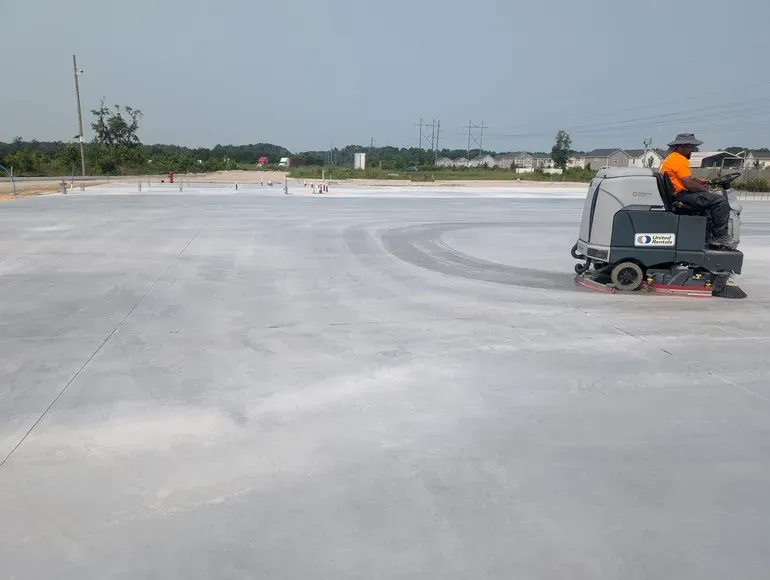
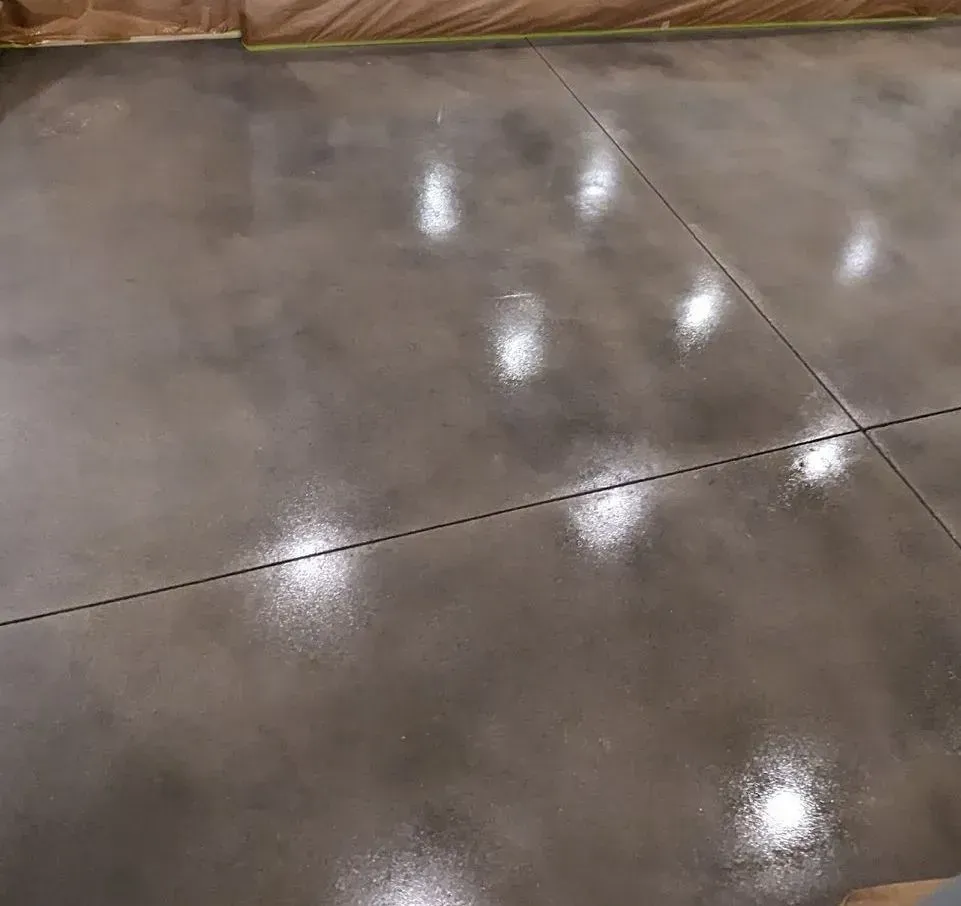
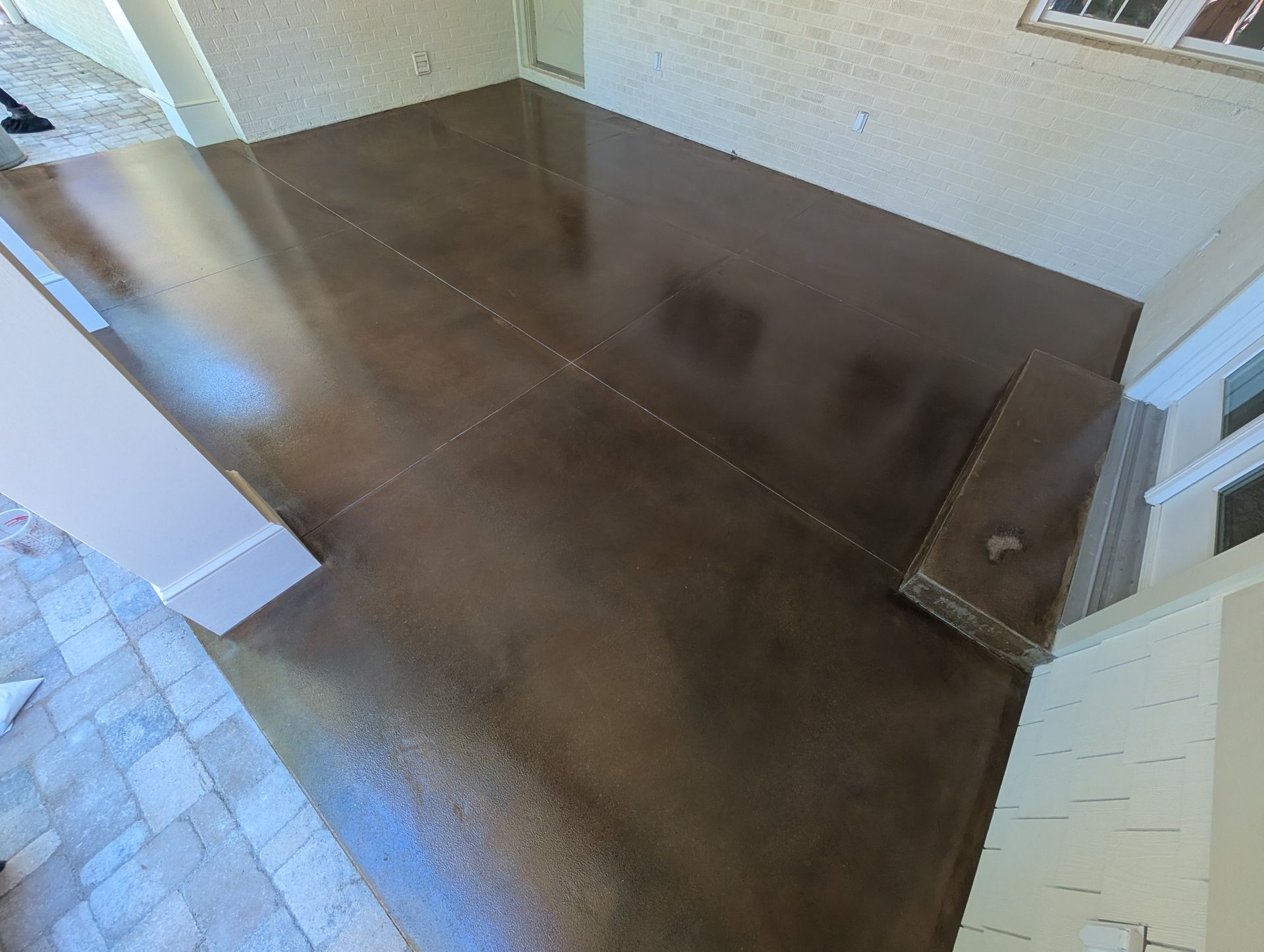
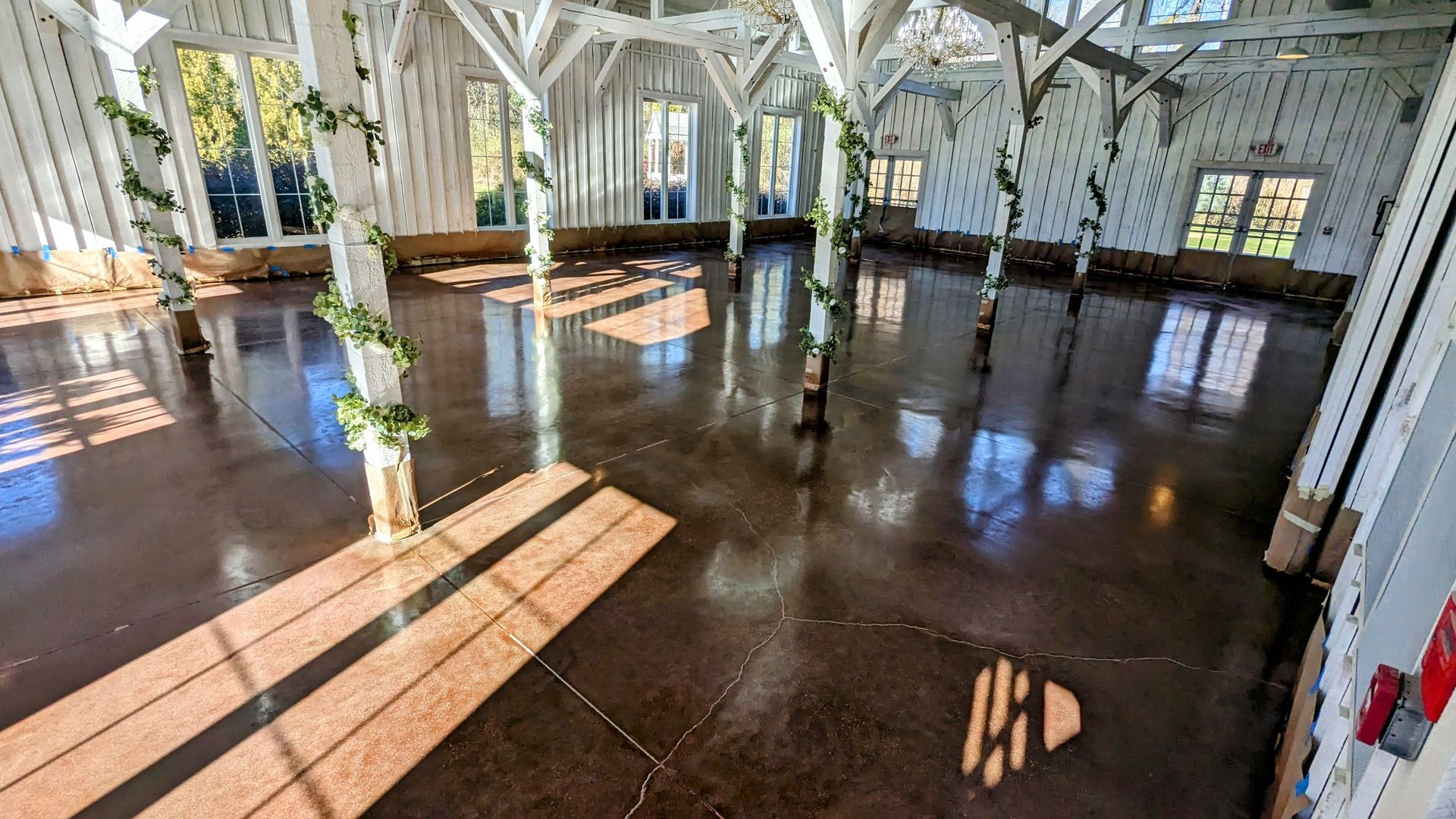
For most fitness facilities, polished concrete is the right foundation. We diamond grind the existing slab, densify it chemically, and polish it to a satin or matte finish. The result is a hard, sealed, easy-to-clean surface that handles sweat, disinfectants, and equipment traffic without breaking down.
Our commercial concrete polishing work in fitness spaces uses sealer systems rated for acidic sweat exposure and daily wet cleaning. The floor also reflects light, which makes studios feel larger and brighter — a real win for boutique concepts where the aesthetic matters.
Under drop zones (deadlift platforms, dumbbell areas, functional training turf), rubber tile or bonded rubber flooring goes over the top of the polish. The polished concrete underneath protects the slab and gives you a clean floor once the rubber is removed or reconfigured.
2. Full Broadcast Epoxy Flake System
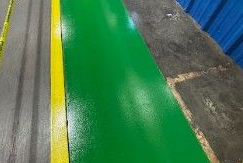
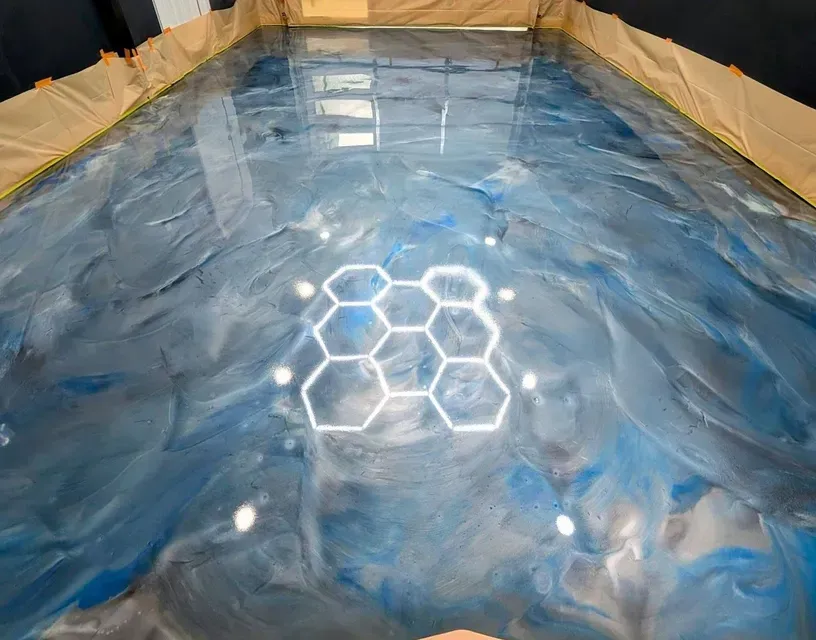
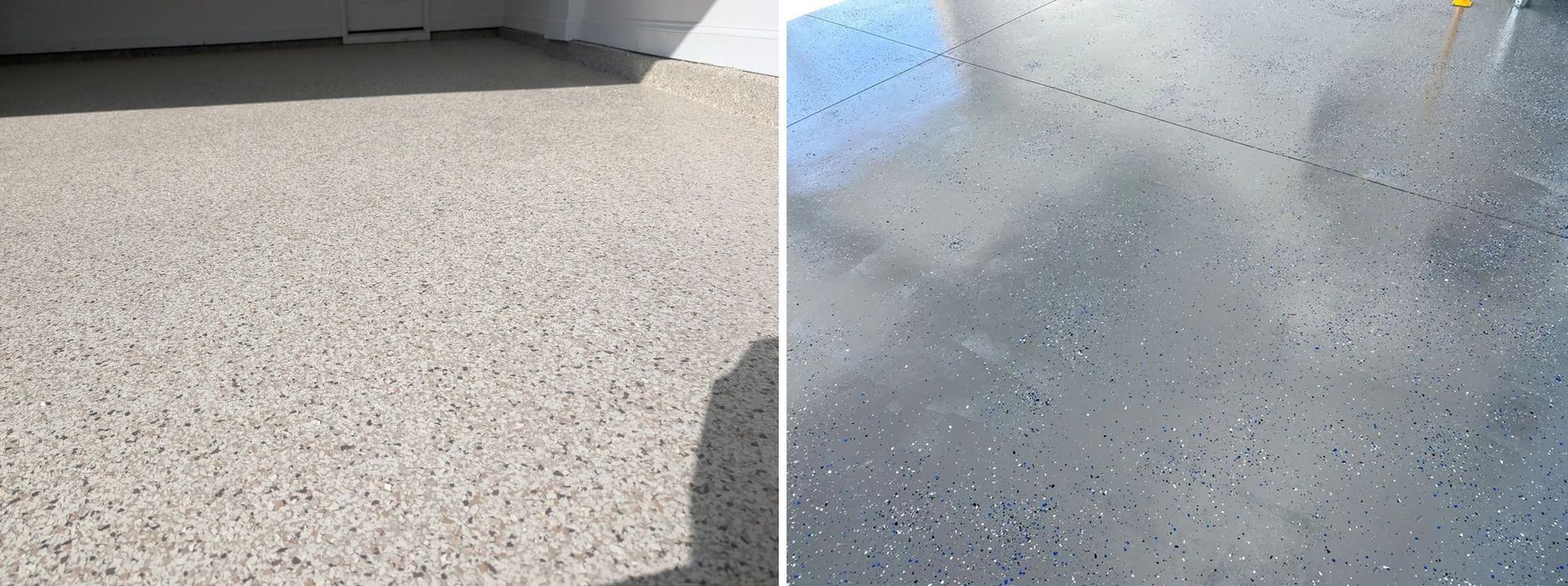
If the aesthetic goal is a more finished, colored, showroom-quality look — common in boutique studios and premium gym brands — a full broadcast epoxy flake system is the upgrade. Multi-layer install: primer, base coat, vinyl flake broadcast, chemical-resistant urethane topcoat. Slip-resistant additive built into the topcoat.
Our commercial epoxy flooring systems can be color-matched to brand and installed in patterns for zone identification (cardio here, strength there, stretching over there). Works especially well in boutique and franchise fitness concepts where floor aesthetics are part of the marketing.
3. Sealed and Dyed Concrete for Budget-Conscious Builds
If polish or full epoxy isn't in the budget, a densifier plus dye plus outdoor-rated sealer gets you 80% of the visual result at a lower price point. Not as hard-wearing as full polish, but sealed enough to handle sweat and cleaning, and colored enough to look intentional. Our commercial concrete coatings options include this tier for owners who need a finished floor without the polish price.
Zone-by-Zone: What Goes Where
Most gyms aren't one uniform floor — different zones have different needs:
- Free weight and drop zones — polished or sealed concrete underneath, rubber tile or bonded rubber over the top. The concrete protects the slab; the rubber protects the equipment and dampens sound.
- Turf and functional training — polished concrete underneath, athletic turf laid over. Turf can be removed or reconfigured without ruining the base floor.
- Cardio deck (treadmills, bikes, rowers) — polished concrete or full epoxy. No rubber needed. Easy to clean sweat off.
- Group fitness rooms (yoga, HIIT, boxing) — depends on the workout. Bare polished concrete for HIIT and boxing, cushioned overlay for yoga.
- Locker rooms, hallways, front desk — polished concrete or decorative epoxy. Sealed for sanitation and wet feet from showers.
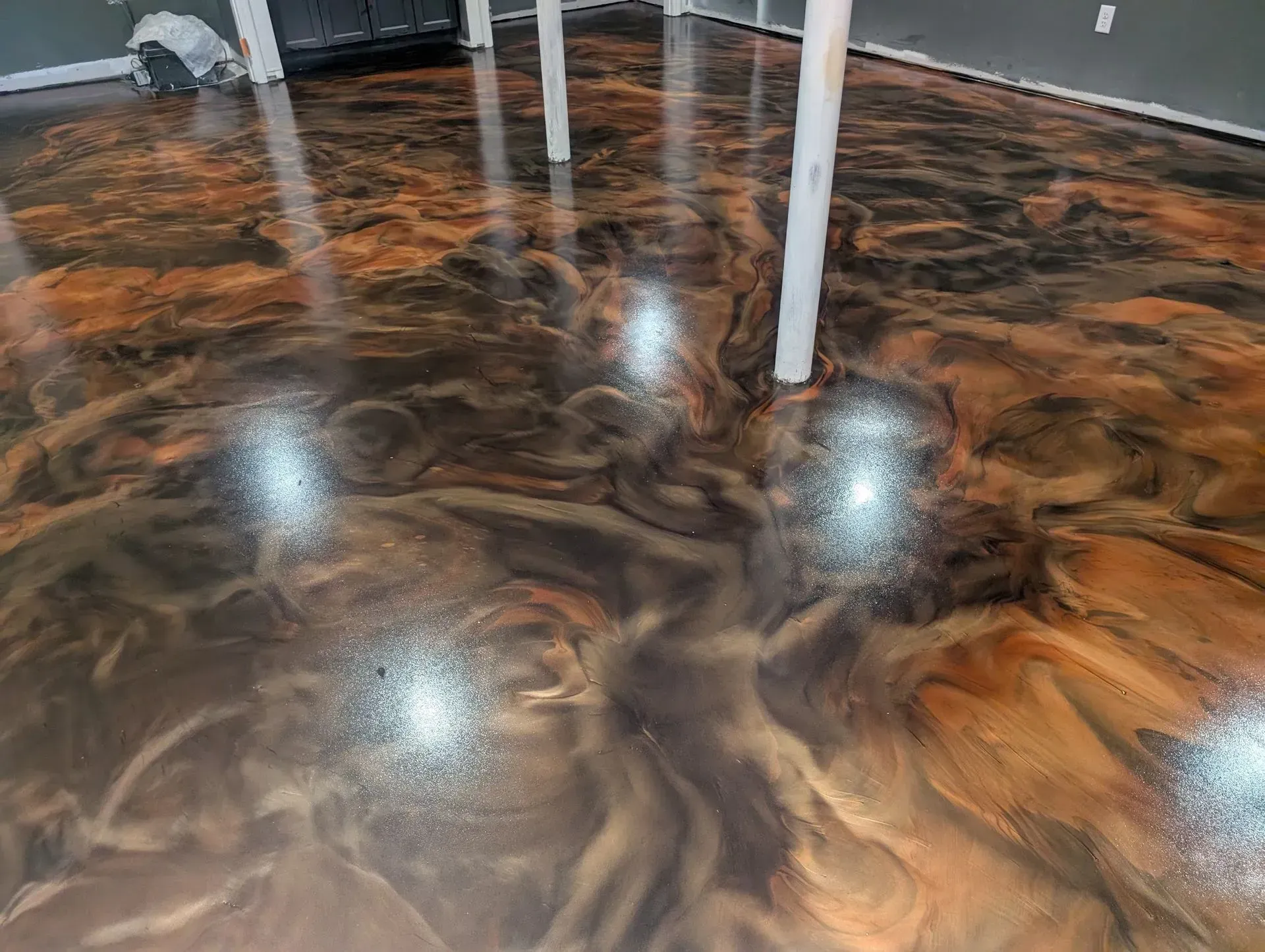
- Reception and retail — where the brand aesthetic matters most. Decorative epoxy or a stained polished concrete floor.
Getting the zoning right saves money — you don't over-spec the whole floor, and you don't under-spec the areas that get the most abuse.
What to Watch Out For
A few things that go wrong with gym floors we get called to fix:
- Residential-grade epoxy in a commercial gym — fails within 12-18 months under real fitness use. Wrong product for the environment.
- Unsealed concrete under rubber matting — sweat wicks under the rubber, gets trapped, and rots the underside of the mat over time. Also starts to smell.
- Wrong sealer for acidic sweat — standard interior sealers break down under repeated sweat exposure. Has to be rated for it.
- Smooth high-gloss finishes — beautiful until someone slips in a puddle mid-class. Slip-resistant topcoat is non-negotiable.
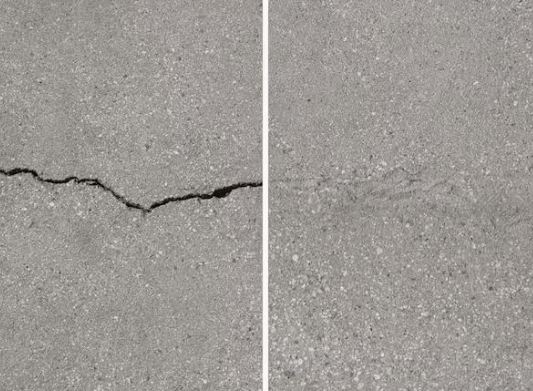
- No slab prep — coating a dirty, unprepared slab is the fastest way to a peeling floor. Diamond grinding is standard for commercial fitness work.
The right questions to ask any flooring contractor bidding on your gym: what's the chemical resistance rating, what's the slip-resistance rating on the topcoat, how do they handle sweat and moisture, and what does the warranty actually cover.
What Gym Flooring Costs in Greenville
For a typical Upstate fitness build-out, polished concrete usually runs between $6 and $10 per square foot, full broadcast epoxy between $8 and $12 per square foot, and sealed-and-dyed budget systems between $4 and $6 per square foot. Rubber matting over the top adds on separately.
A 5,000 sq ft boutique studio typically lands somewhere between $30,000 and $50,000 for the base floor system, with rubber zones adding to that. Larger commercial gyms scale down per-square-foot as the footprint gets bigger.
How ZDC Approaches Gym Floors in the Upstate
We've worked on fitness floors across Greenville, Greer, Mauldin, Simpsonville, and Travelers Rest. Our approach is the same every time: walk the space, understand the zones and the workouts, spec the right base system for each area, and coordinate with your rubber flooring supplier so the layers work together.
If you're opening a new studio, remodeling an existing one, or dealing with a base floor that's already failing under a rubber mat, we can walk it with you and give you an honest read on what fits.
Get a Free Estimate for Your Greenville Gym Floor
Give Zach a call at
(864) 770-8608 or
reach out through our contact page. On-site consultations are free across the Upstate. We'll bring samples, walk the space, and send you a written estimate you can plan around.