Basement Epoxy Flooring: What Every Greenville Homeowner Should Know Before Hiring a Contractor
Basement floor projects in Greenville are almost always driven by the same moment: the homeowner finally decides to finish the space, or they're tired of looking at a gray slab that stains every time it rains, or they've watched a neighbor's basement epoxy peel up within two years and want to know how to avoid the same outcome.
Basement epoxy is one of the most popular residential concrete projects we do across Greenville, Greer, Mauldin, Simpsonville, and the surrounding Upstate. It's also one of the most commonly misunderstood. The work looks simple from the outside — roll some epoxy on the floor, done. But a basement slab in South Carolina has specific challenges that, if ignored, turn a good-looking floor into a peeling, bubbling mess within 18 months.
Here's what every Greenville homeowner should understand before signing a contract for basement epoxy.
Why Basement Slabs Are Different From Other Concrete Floors
A basement slab sits below grade, which means it's surrounded by soil on three sides. South Carolina's climate — high humidity, significant rainfall, and warm soil temperatures for most of the year — means moisture is constantly present around and under that slab.
That moisture doesn't just sit there. It moves. Moisture vapor rises up through the concrete and pushes against whatever coating is on the surface from underneath. If the coating isn't specified to handle that pressure — if moisture wasn't tested before install — the vapor has nowhere to go. It accumulates under the epoxy and eventually causes blistering, bubbling, and delamination.
This is the single most common failure mode for basement epoxy in the Upstate, and it's entirely preventable with proper testing and the right system spec.
Step One: Moisture Testing Before Anything Else
Before we quote any basement epoxy project, we test the slab for moisture vapor transmission. The standard method is a calcium chloride test or an in-situ relative humidity probe — both measure how much moisture vapor is moving through the concrete per day.
If readings are high, we spec a moisture-mitigating primer before the epoxy system goes down. That primer creates a barrier between the rising vapor and the coating, and it's what separates a 10-year floor from a floor that fails in 18 months.
If a contractor quotes your basement epoxy without mentioning moisture testing, that's a problem. Either they're skipping the step or they don't know it matters.
What to Ask Every Contractor Before Signing
Basement epoxy is a category where the price difference between quotes often reflects real differences in what's actually being installed. Here's what to ask:
- Do you test for moisture vapor transmission before install? — If no, walk away. This is non-negotiable for a below-grade slab in SC.
- What primer system are you using, and is it moisture-mitigating? — A vapor barrier primer costs more than a standard primer. Make sure the quote includes it if readings call for it.
- How are you preparing the surface? — Diamond grinding is the correct answer. Acid etching is the cheaper shortcut that produces weaker adhesion.
- What's the mil thickness of the base coat and topcoat? — Thicker coats = longer life. A quality residential basement system should have a minimum 10-12 mil total build. Thin-mil systems fail faster.
- What topcoat are you using? — A polyaspartic or aliphatic urethane topcoat is more durable and UV-stable than a standard epoxy topcoat. Matters especially near windows or walk-out basements with natural light.
- What's the warranty, and what does it actually cover? — Read the warranty carefully. Most exclude moisture-related failures unless a moisture-mitigating primer was specified — which means a contractor who skips the primer also skips the warranty coverage.
Surface Prep: The Step That Determines Everything
The coating is only as good as the bond to the slab. And the bond is only as good as the surface preparation.
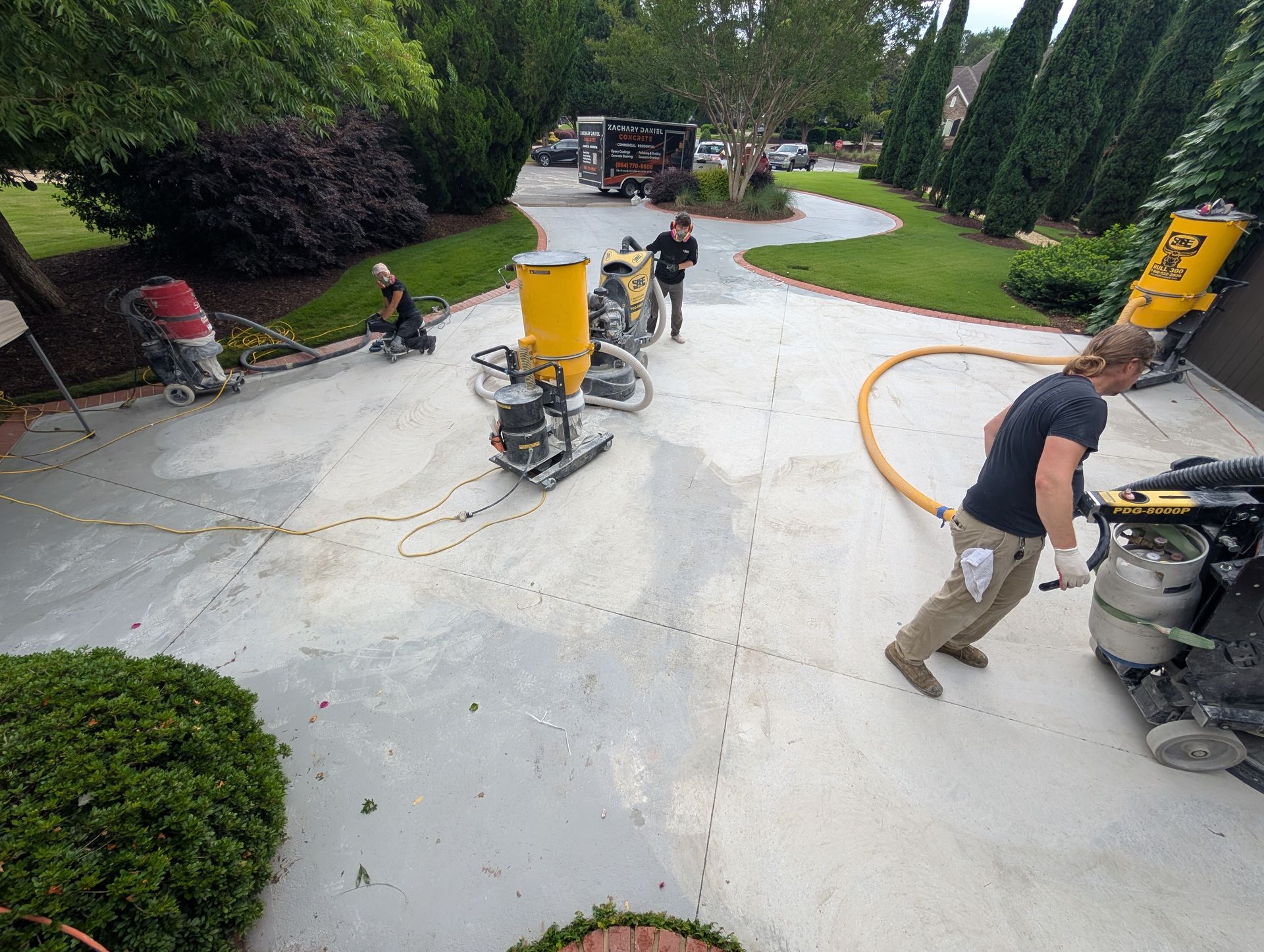
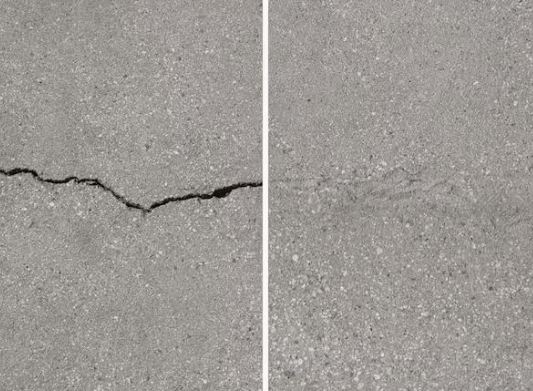
For basement epoxy, proper prep means mechanical diamond grinding — using a grinder with diamond tooling to open the concrete surface, remove any contamination, and create the profile that lets the epoxy bond mechanically to the slab. It also means repairing cracks and spalls before coating, not after.
The shortcut some contractors take is acid etching — applying muriatic acid to the slab instead of grinding. It's faster and cheaper, but it produces a weaker surface profile and doesn't remove oil contamination or old coating residue the way grinding does. Acid etching on a basement slab also interacts poorly with moisture issues that are already present.
Our epoxy flooring work — whether garage, basement, or commercial — always starts with diamond grinding. We don't cut that corner because it's the corner that determines whether the floor lasts.
Choosing the Right System for Your Basement
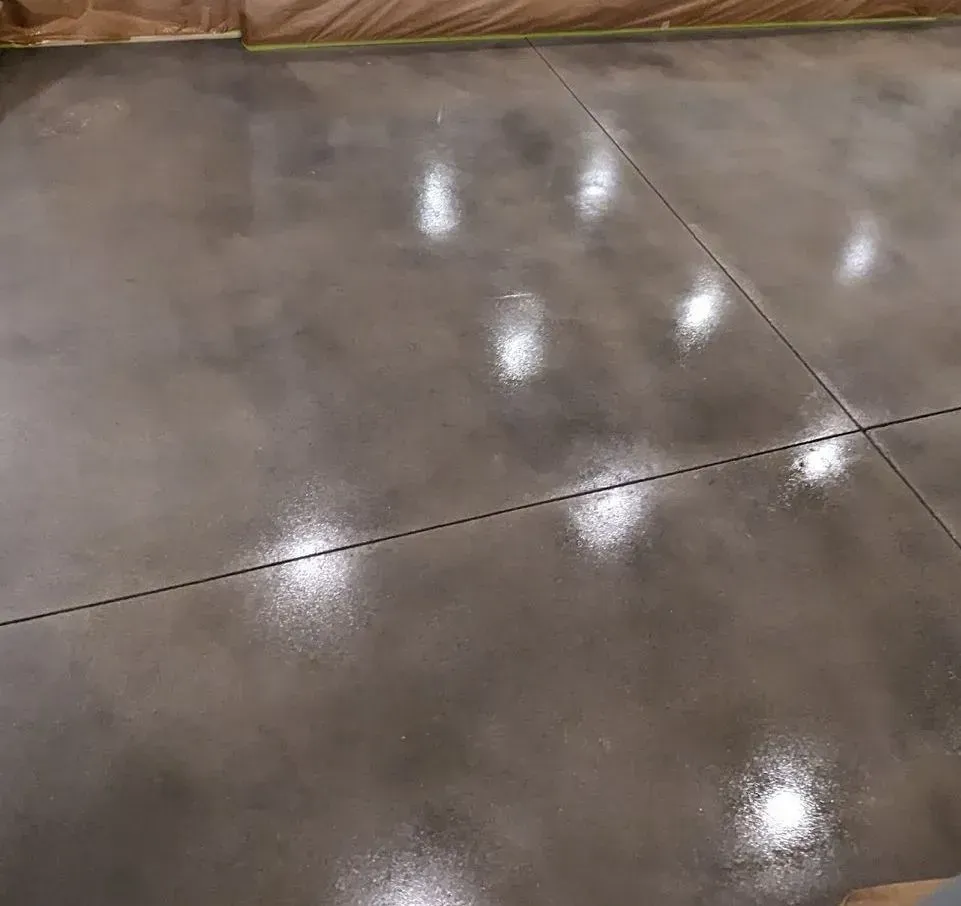
Not all basement epoxy looks or performs the same. The main options for Greenville homeowners:
Solid Color Epoxy
Clean, uniform look. Good for utility basements, storage areas, or gym spaces. Usually the most budget-friendly option. Runs $4 to $7 per square foot for a quality system on a prepared slab.
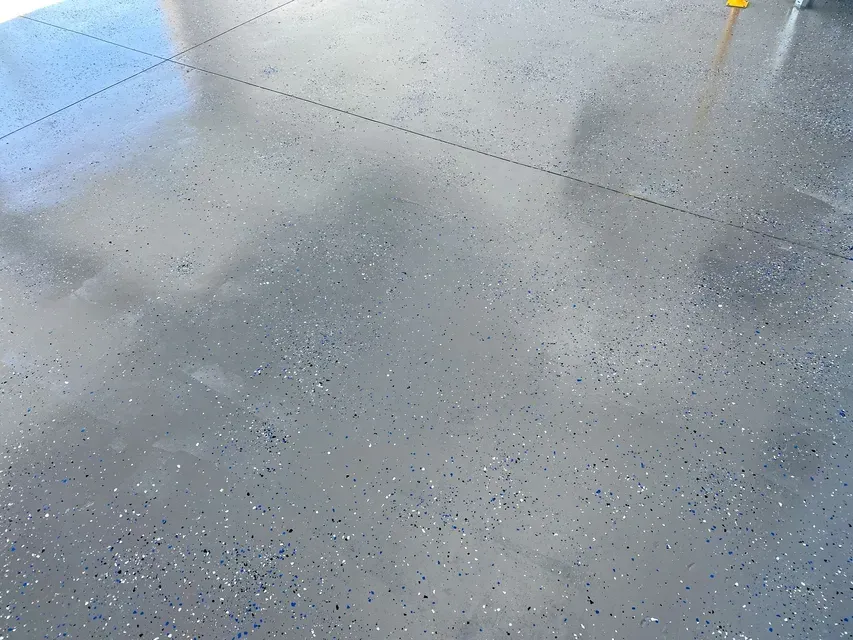
Full Broadcast Flake System
The most popular choice for finished basement living spaces. Multi-color vinyl flake broadcast into the wet base coat, sealed with a clear urethane topcoat. Hides minor surface imperfections better than solid color, adds texture for slip resistance, and holds up to real family use. Runs $6 to $10 per square foot for a quality system.
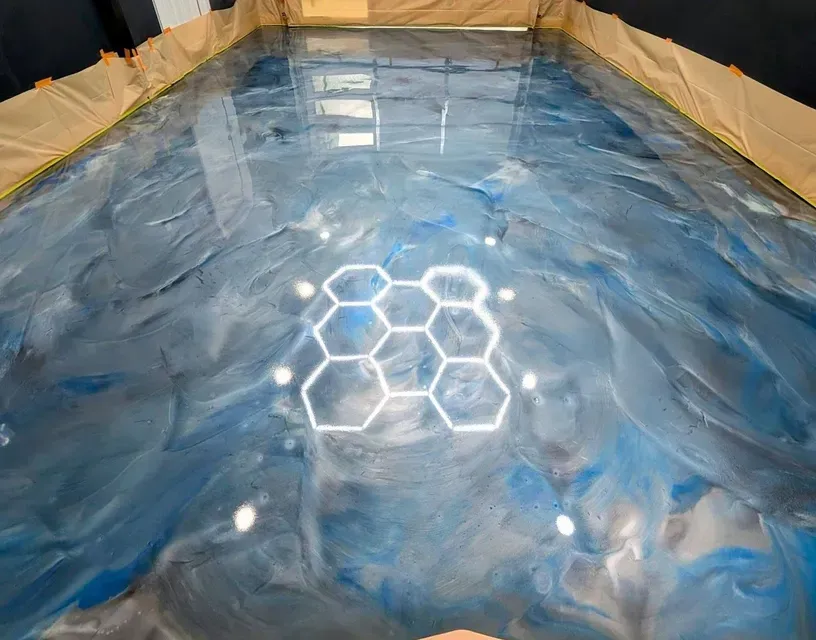
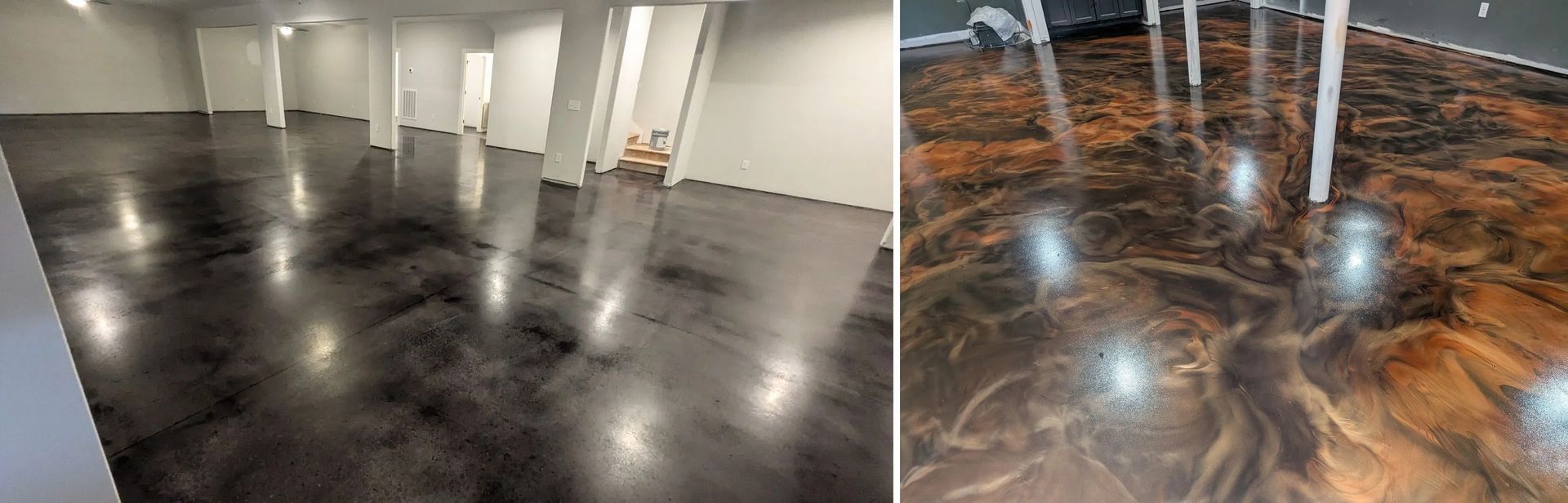
Metallic Epoxy
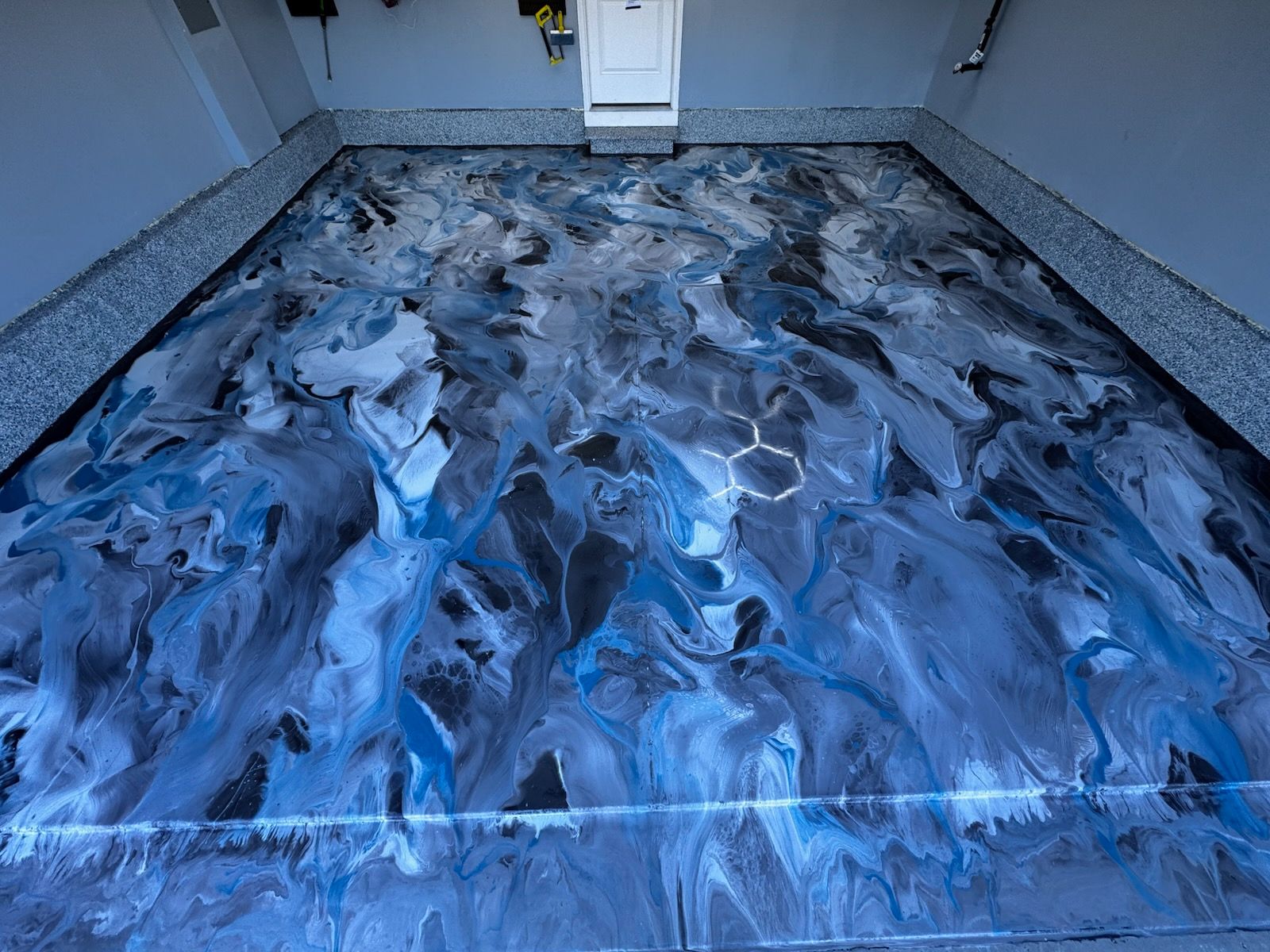
High-end, dramatic look — swirling, liquid-like finish in custom colors. Popular in finished basements being used as home theaters, bars, or entertainment spaces. Runs $8 to $12 per square foot. Requires more skilled application than flake systems.
For a typical Greenville basement between 500 and 1,000 sq ft, most quality epoxy projects land between $3,500 and $8,000 depending on the system, slab condition, and prep required.
Walk-Out Basements and Daylight Basements: One More Variable
Walk-out basements and daylight basements in the Upstate get direct sunlight on part of the floor. Standard epoxy yellows under UV exposure — sometimes within a year. For these spaces, a polyaspartic or UV-stable aliphatic urethane topcoat is required, not optional. It costs slightly more but is the difference between a floor that looks good at year 5 and one that's yellowed and chalky by year 2.
Our concrete coatings specs always account for UV exposure when it's a factor in the project.
Common Basement Epoxy Failures We Get Called to Fix
- Peeling within 12-18 months — almost always moisture vapor that wasn't tested for or addressed
- Bubbling or blistering — same root cause: moisture pushing up under a coating that wasn't rated for it
- Adhesion failure at edges and seams — inadequate surface prep, usually acid etch instead of grind
- Yellowing near windows — standard epoxy topcoat on a daylight or walk-out basement
- Thin coating wearing through in high-traffic areas — under-spec'd mil thickness, wrong product for the use
Every one of these failures is preventable. And every one of them we've seen from a prior contractor on a basement we were called to redo.
How ZDC Approaches Basement Epoxy in Greenville
We test the slab first, every time. We grind instead of etch. We specify moisture mitigation when readings call for it. We use topcoat systems matched to the environment — UV-stable for daylight basements, standard urethane for fully below-grade spaces. And we give you a written spec that tells you exactly what's going in, so you can compare it against any other quote you get.
Get a Free Estimate for Your Greenville Basement
Give Zach a call at (864) 770-8608 or reach out through our contact page. On-site consultations and moisture testing are free across Greenville, Greer, Mauldin, Simpsonville, Travelers Rest, and the broader Upstate.