How Long Does Commercial Epoxy Flooring Last in South Carolina Climate?
One of the most common questions we get from business owners in Greenville, Spartanburg, and across the Upstate is the one nobody on the manufacturer's brochure ever answers honestly: how long will this floor actually last?
Manufacturer literature throws around numbers like "20-year lifespan" and "lifetime durability." The reality on a working commercial floor in South Carolina humidity, heat, and traffic is more nuanced. Some floors hit those numbers. Others fail in 18 months. The difference is almost always in the install, the system spec, and how the floor gets used — not in the marketing copy.
Here's the honest answer to how long commercial epoxy lasts in our climate, and what determines whether you land at the long end or the short end of the range.
The Realistic Range: 10-25 Years
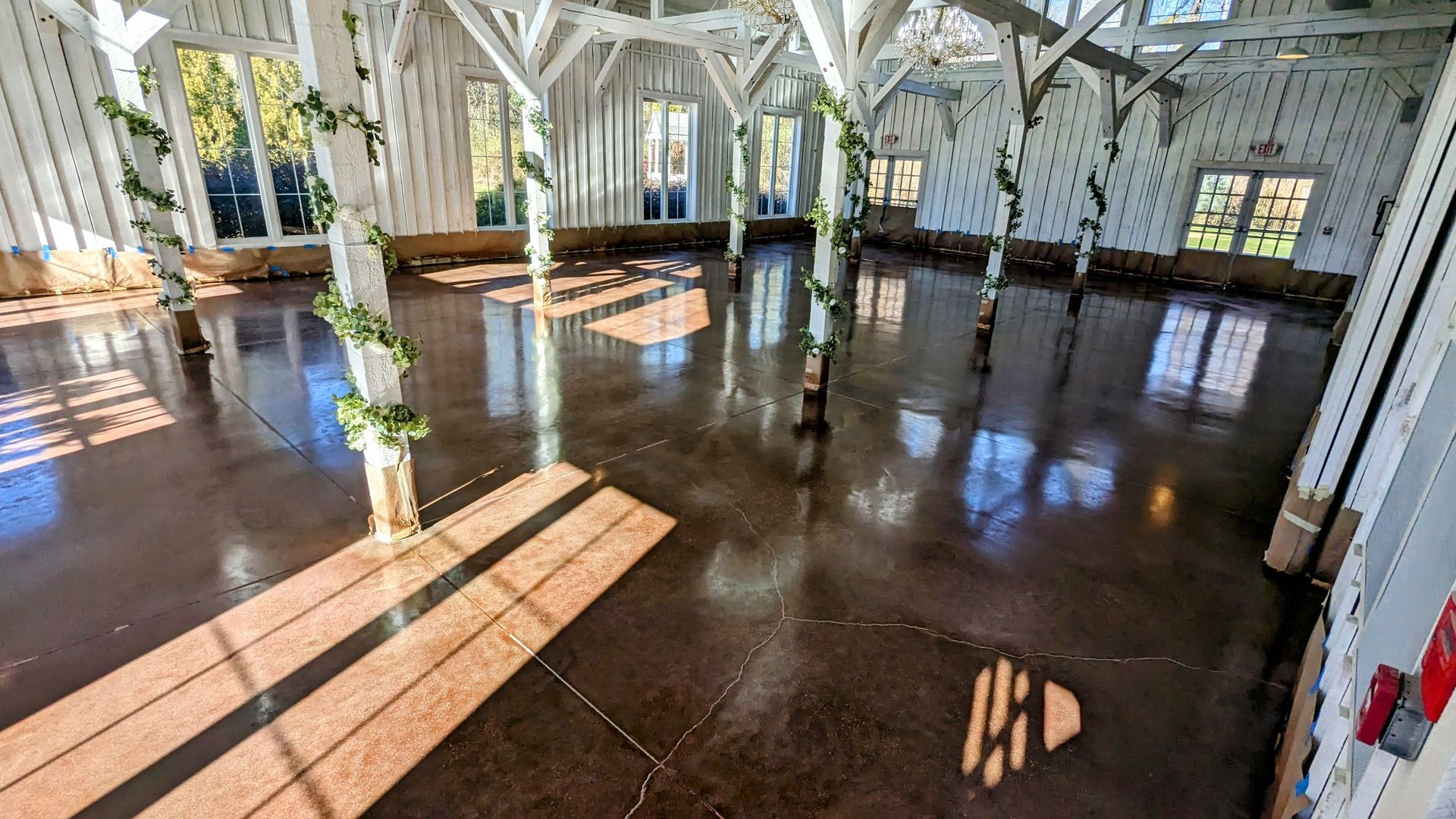
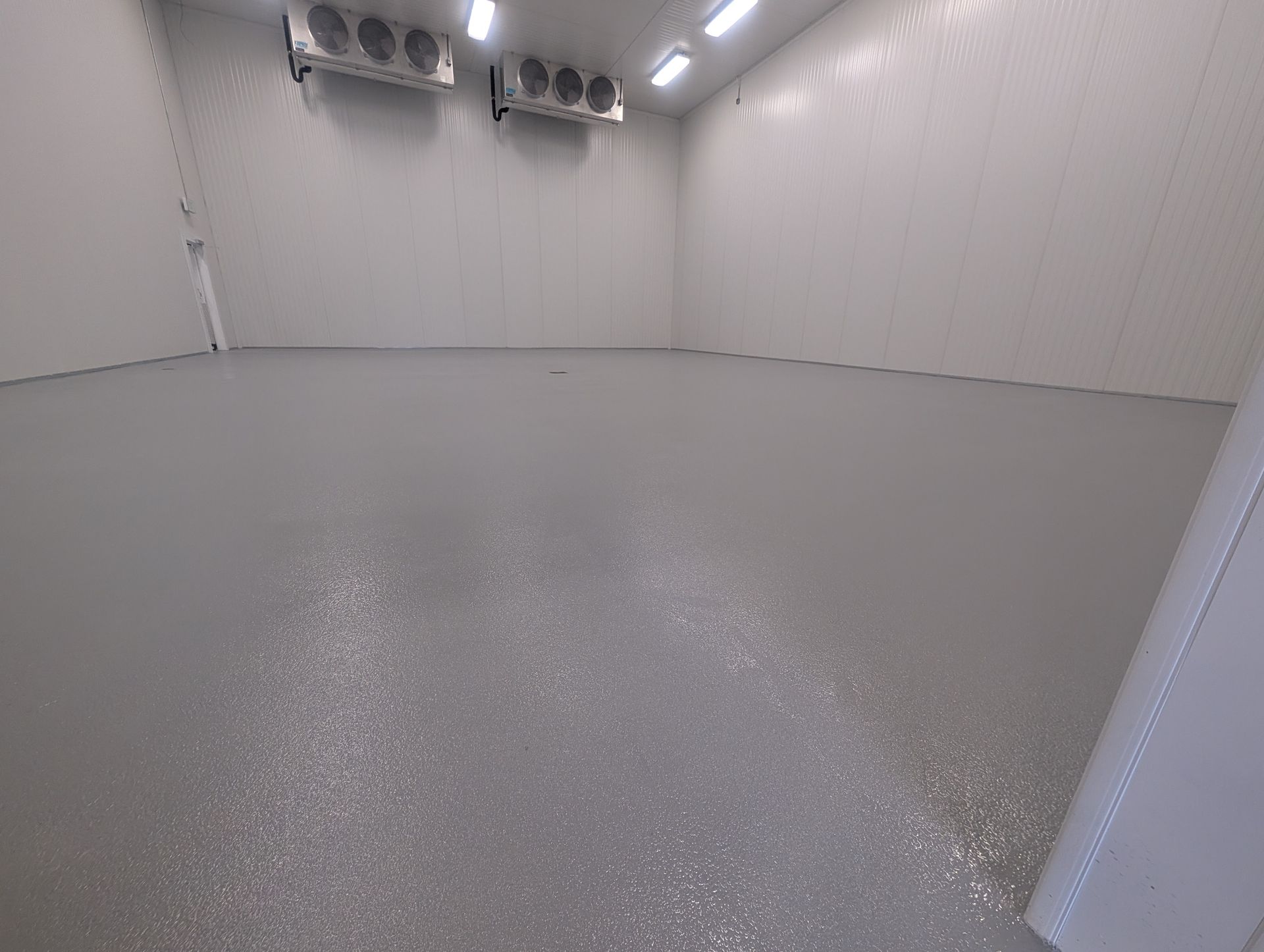
A properly installed commercial epoxy floor in South Carolina should last 10 to 25 years depending on system, environment, and traffic. That's a wide range for a reason — "commercial epoxy" covers everything from a thin-mil warehouse sealer to a full broadcast flake system to chemical-resistant urethane cement, and they all age differently.
Broadly:
- Thin-mil epoxy in light commercial use — 5-10 years before refresh
- Standard commercial epoxy system in normal traffic — 10-15 years
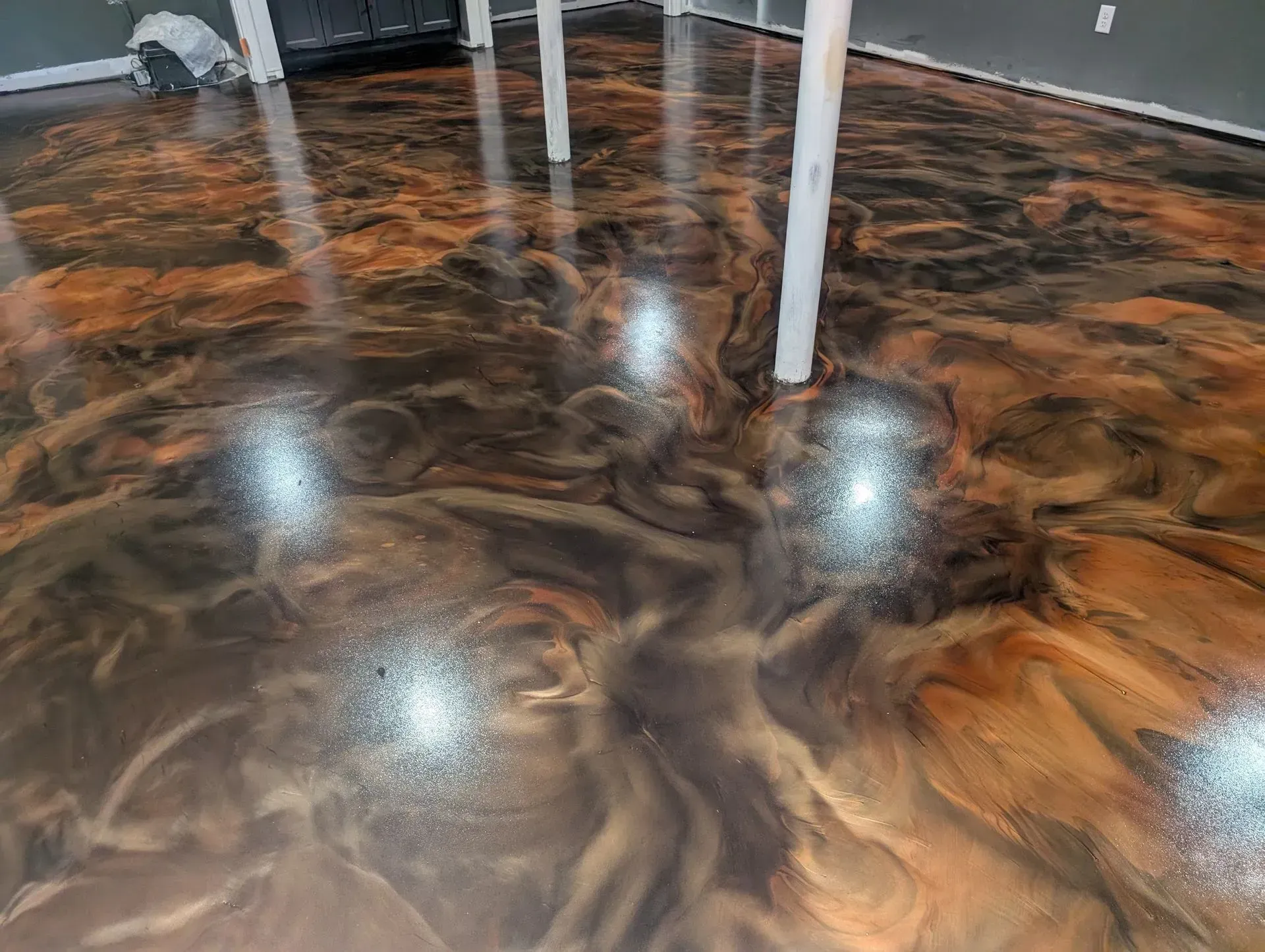
- Full broadcast flake or quartz with urethane topcoat — 15-20 years
- Urethane cement in industrial use — 20-25+ years
These are real numbers, not catalog claims. The variables that move you up or down the range are what we'll talk through next.
What Makes South Carolina Climate Hard on Floors
South Carolina puts specific demands on a coated floor:
- Humidity — high ambient moisture stresses any coating system, both during install and over time
- Moisture vapor transmission — concrete slabs in our climate often have vapor moving up through the slab from below. The wrong coating traps it and fails
- Thermal cycling — daytime heat plus AC interior creates thermal stress on coatings, especially near doors, loading bays, and uninsulated spaces
- UV exposure — south-facing windows, skylights, and outdoor-adjacent spaces expose floors to UV that yellows or breaks down the wrong topcoat
- Pollen and humidity-driven biological growth — outdoor or semi-outdoor concrete in SC sees more biological staining than dry-climate floors
None of these are dealbreakers. They just mean the system has to be spec'd for the climate, not for a marketing brochure written in California.
What Determines How Long Your Floor Actually Lasts
1. Surface Preparation
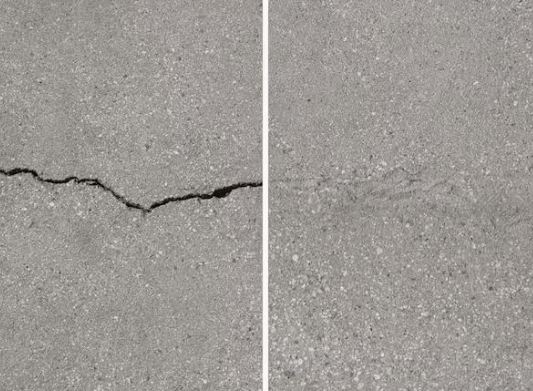
This is the single biggest factor. A coating bonded to a properly diamond-ground slab with no contamination, no moisture issues, and no surface defects can last decades. A coating slapped onto an unprepared slab will start failing in 12-24 months — even if the coating itself is excellent.
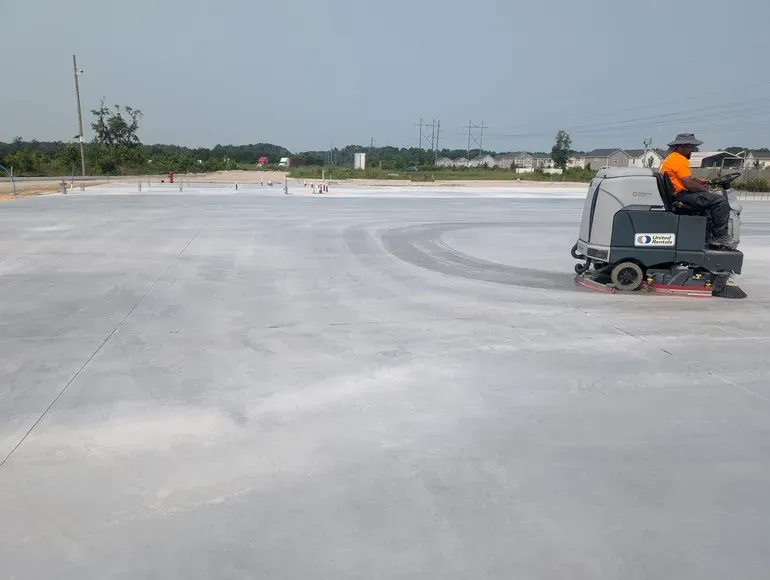
If a contractor's quote skimps on prep, the floor is going to fail. We've seen it dozens of times. Our commercial epoxy flooring work always starts with mechanical grinding and moisture testing — non-negotiable.
2. The Right System for the Use
A solid color epoxy in a brewery will fail. A urethane cement in a quiet office is overkill. The system has to match what the floor will actually deal with — daily chemicals, traffic load, thermal exposure, moisture conditions, UV exposure. Spec'd correctly, the system lasts. Spec'd wrong, even an expensive system can fail early.
Our industrial epoxy flooring spec is different from a standard commercial spec for exactly this reason. The right answer for a heavy-duty production floor is not the right answer for a retail showroom.
3. Moisture Management on the Slab
South Carolina slabs frequently have moisture vapor transmission issues that don't show up until a coating goes down. The moisture pushes up against the underside of the coating, can't escape, and eventually causes blistering, delamination, or osmotic failure. We test for this before quoting any major project and use moisture mitigation primers where the readings call for it.
4. Topcoat Quality and UV Stability
In areas with sunlight exposure, a standard amine-cured epoxy will yellow within a few years. The fix is a UV-stable polyaspartic or aliphatic urethane topcoat. Costs slightly more upfront; doubles the visual lifespan of the floor.
5. Daily Use and Maintenance
The same floor with the same install will last 10 years longer in a facility that auto-scrubs weekly and addresses spills quickly than in one that ignores both. Maintenance is more about extending lifespan than fixing failures.
What Tends to Fail First (And When to Address It)
Even on well-installed floors, some things wear before others. The order it usually happens:
- Topcoat sheen loss (3-7 years) — cosmetic, not structural. A re-topcoat refreshes it.
- Color fading from UV (5-10 years) — usually in sunlight-exposed zones. Repairable.
- Wear-through at high-traffic spots (8-12 years) — doorways, aisles, pivot points. Spot-repair or recoat.
- Topcoat scratching from heavy equipment (variable) — addressed by a topcoat refresh, not a full system replacement.
- Underlying coating failure (15+ years on a quality install) — at this point the system has earned its keep and a renovation is reasonable.
Most "failures" we see in years 3-7 are not the coating itself failing — they're the topcoat losing sheen or showing wear. A topcoat refresh on a sound floor is fast and inexpensive. It's not the same as replacing the system.
Our floor restoration work covers everything from topcoat refresh to full system replacement, depending on what your floor actually needs.
How to Make Your Greenville Commercial Floor Last Longer
A few practical things that extend lifespan:
- Spec the system for actual use, not for the cheapest acceptable option
- Insist on proper surface prep and moisture testing in the quote
- Use UV-stable topcoats in areas with sunlight exposure
- Set up auto-scrubbing on a regular schedule
- Address spills quickly — especially acidic spills (food, beverages, chemicals)
- Use chair mats or wheeled-equipment paths in high-impact zones
- Refresh the topcoat at year 5-7 instead of waiting for full failure at year 12
Most of these are free or cheap. The biggest one is making sure the install is done right in the first place.
How ZDC Approaches Lifespan
We'd rather quote a longer-lasting system honestly than win a job by underselling prep and watching the floor fail in two years. The Upstate is a small market and reputations travel — most of our work comes from referrals and repeat clients, which only happens when floors actually last.
When we walk a slab, we test moisture, talk through the actual use, and recommend the system that fits both your performance needs and a reasonable lifespan expectation. Sometimes that's a basic densifier and sealer. Sometimes it's a full broadcast flake. The right answer depends on your floor, not on what we feel like installing.
Get a Free Estimate for Your Greenville Commercial Floor
If you're planning a new floor, considering refresh options on an existing one, or trying to figure out how much life is left in a coating that's looking tired, give Zach a call at (864) 770-8608 or reach out through our contact page. We'll walk the slab, give you an honest read on its condition, and recommend what makes sense. On-site consultations are free across Greenville, Spartanburg, and the broader Upstate.