Auto Shop Floor Coatings
Auto Shop Floor Coatings: What Greenville Mechanics Need to Know
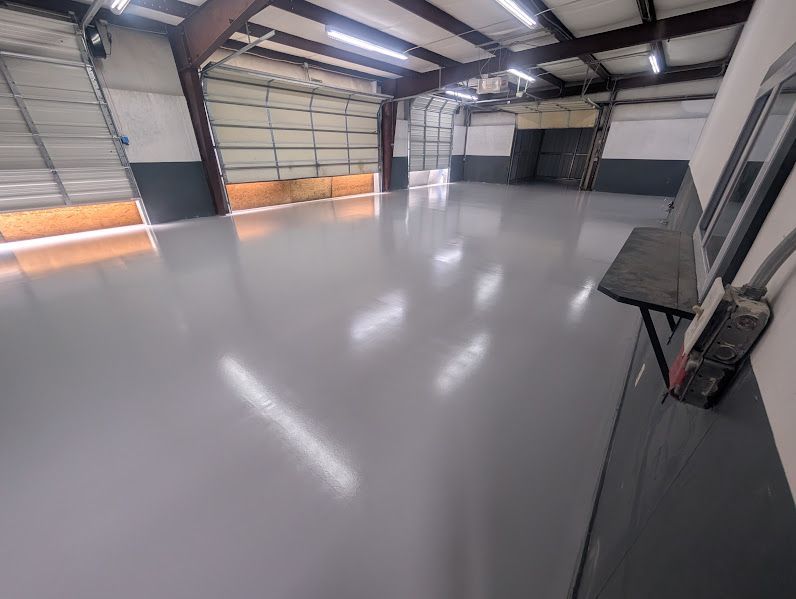
An auto shop floor takes more abuse than almost any other commercial floor we work on. Hot tires, dropped tools, hydraulic fluid, brake cleaner, transmission fluid, battery acid, two-post lifts loaded with vehicles, and the constant grind of techs moving carts and equipment all day. If your floor isn't built for it, you'll know within a year.
We get calls from Greenville auto shops at two different moments. The first is when an owner is opening a new shop and wants to do it right from the start. The second is when an owner has a floor that's already failed — peeling, stained, cracked — and needs us to fix it. Either way, here's what we tell them.
Why Auto Shop Floors Need More Than a Standard Epoxy
The biggest mistake we see in Upstate auto shops is owners installing a residential garage floor coating in a commercial bay. They look the same in a brochure. They are not the same product.
A standard 1-part epoxy or polyaspartic kit from a big-box store is fine for a homeowner's garage that sees a daily driver and a tool chest. Drop a transmission on it, park a hot semi tire on it, or spill a quart of brake cleaner on it, and that coating doesn't last.
The challenges a real auto shop floor has to handle:
- Hot tire pickup — when tires come off the road hot, cheap coatings literally lift off the slab
- Chemical exposure — oils, solvents, coolants, battery acid, and degreasers all attack unprotected surfaces
- Impact and abrasion — dropped tools, rolling jacks, and steel-wheeled carts grind away at thin coatings
- Slip risk when wet — oil on a glossy floor is a liability lawsuit waiting to happen
- Lift loads — concentrated weight at lift posts can fracture a coating that wasn't installed over properly prepped concrete
A real commercial auto shop coating is a different system. Thicker, chemical-resistant, slip-rated, and bonded to a properly ground slab.
The Best Floor Coating Options for Greenville Auto Shops
1. Full Broadcast Epoxy Flake System
This is our most common recommendation for auto shop bays. It's a multi-layer system: epoxy primer, full broadcast of vinyl flake, and a chemical-resistant urethane or polyaspartic topcoat. The flake adds texture for slip resistance, hides dirt and minor wear, and gives the floor a professional look that customers notice.
Our commercial epoxy flooring systems with flake hold up to hot tires, hydraulic fluid, and the daily abuse of a working shop. We've installed these in everything from independent repair shops to dealer service bays across the Upstate.
2. Solid Color Epoxy with Polyaspartic Topcoat
If the look you want is clean and uniform — a single color, no flake — a solid epoxy base with a polyaspartic topcoat is a strong option. It cures fast, resists chemicals well, and looks sharp under shop lighting. The trade-off is that solid colors show dirt and wear more obviously than flake systems.
3. Urethane Cement for Heavy-Duty Shops
For diesel shops, fleet maintenance facilities, and heavy equipment service bays where the chemical exposure is extreme, urethane cement is the upgrade. More expensive, but built to handle the worst conditions you can throw at a concrete floor. Same systems used in food processing — overbuilt for most auto shops, but the right call for the heaviest-duty operations.
What About the Office, Waiting Area, and Customer-Facing Spaces?
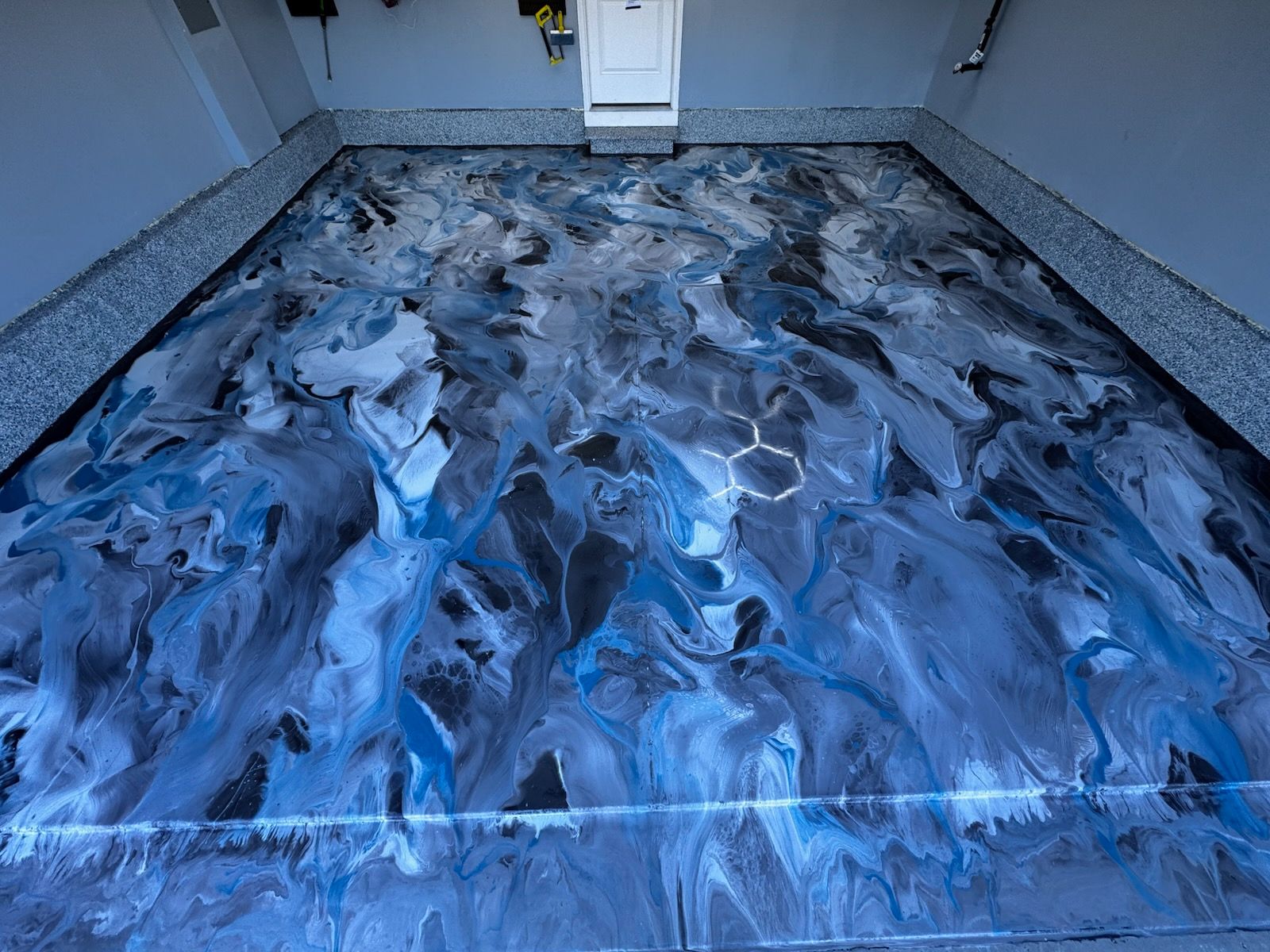
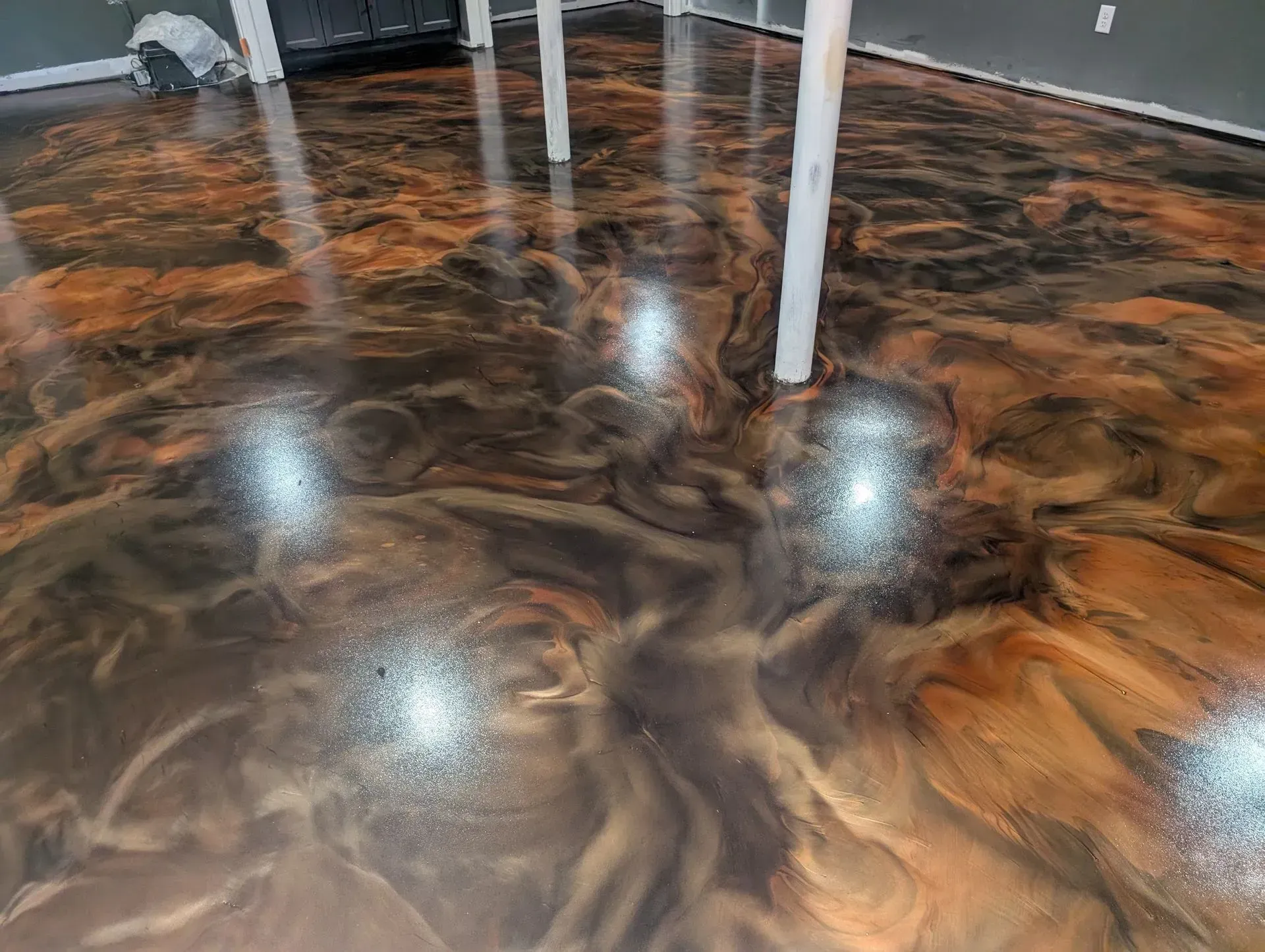
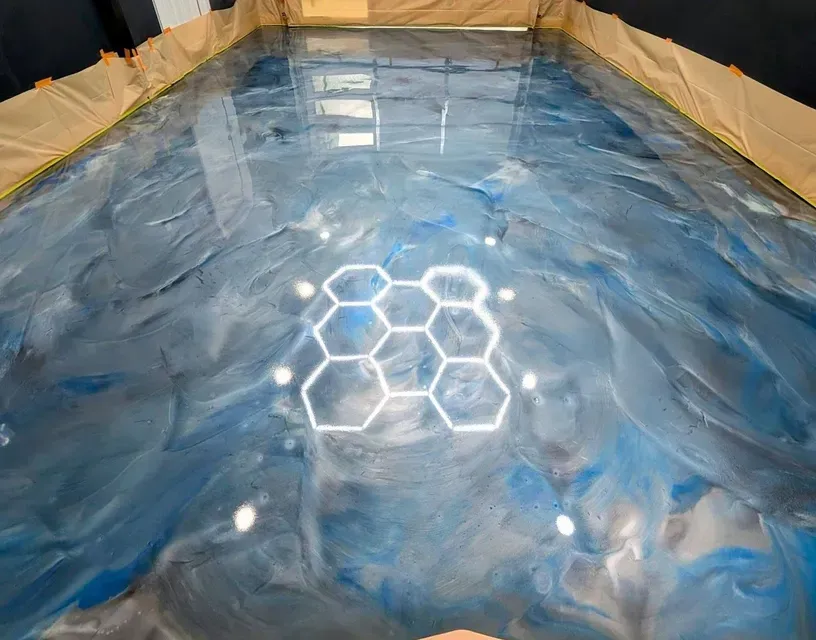
The shop floor is one thing. The customer-facing parts of your business are another. A clean polished concrete or metallic epoxy floor in your waiting area or showroom sends a different signal than worn vinyl tile or stained carpet.
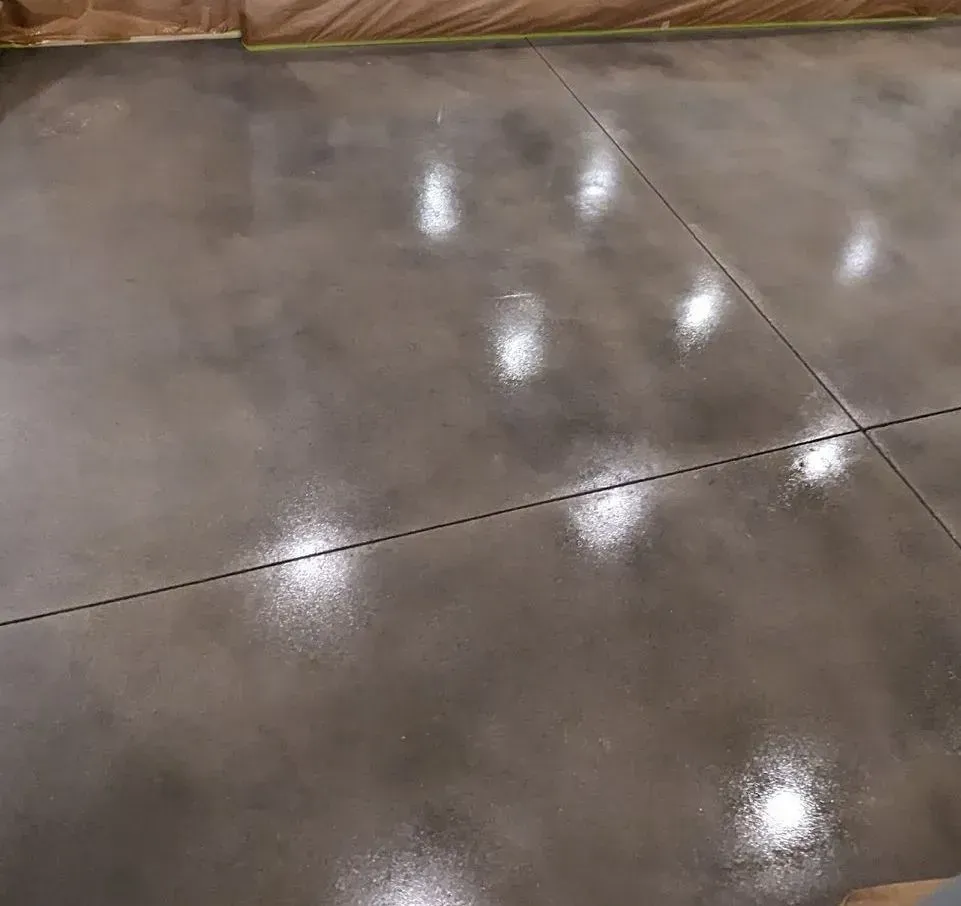
We've done shops where the bays got a flake epoxy system and the customer waiting area got a polished concrete finish — same contractor, same project, two completely different looks. If your shop has a retail component or a customer lounge, it's worth thinking about the front-of-house floor as part of the same conversation. Our broader concrete coatings options give you flexibility to match each zone to its use.
Common Auto Shop Floor Failures We Get Called to Fix
Every floor failure has a cause. The ones we see most often in Greenville auto shops:
- Hot tire pickup — the coating literally peels off where tires sat. Almost always a sign of a residential-grade product on a commercial floor.
- Delamination at lift posts — bad surface prep. The coating never bonded properly to start with.
- Yellow staining from chemicals — wrong topcoat for the exposure. UV and solvent resistance matters.
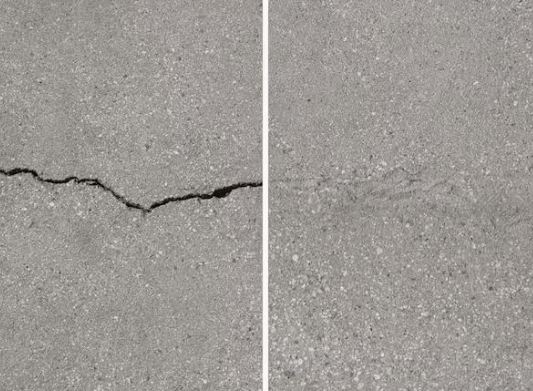
- Cracking and chipping at high-traffic spots — coating too thin, or applied over a slab that needed crack repair first.
- Slippery when wet — no slip-resistant additive in the topcoat. Avoidable, and a real liability.
The fix usually means stripping the failed coating, repairing the slab, and reinstalling a system rated for actual shop conditions. It costs more than doing it right the first time — every time.
How ZDC Handles Auto Shop Floors in the Upstate
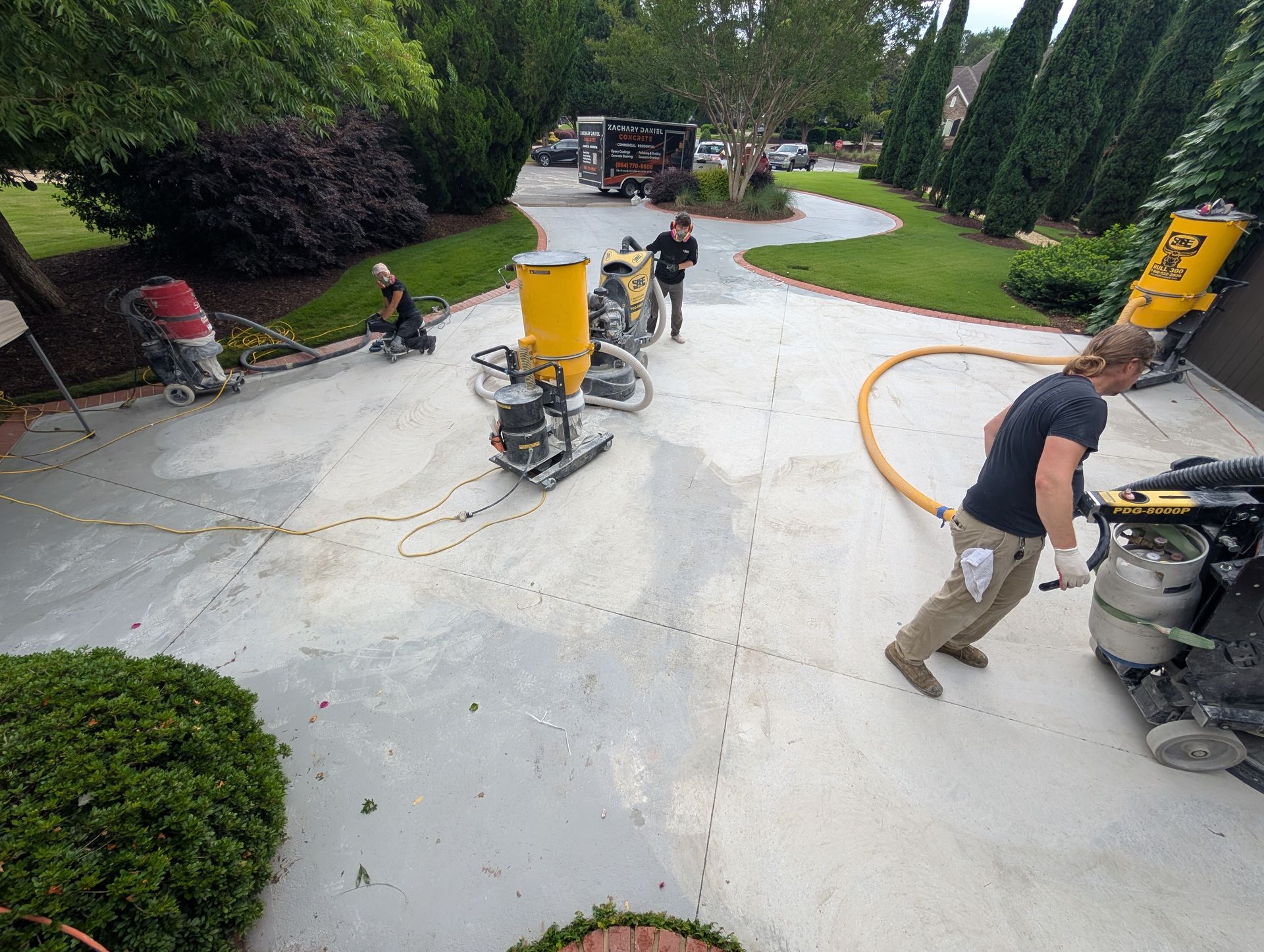
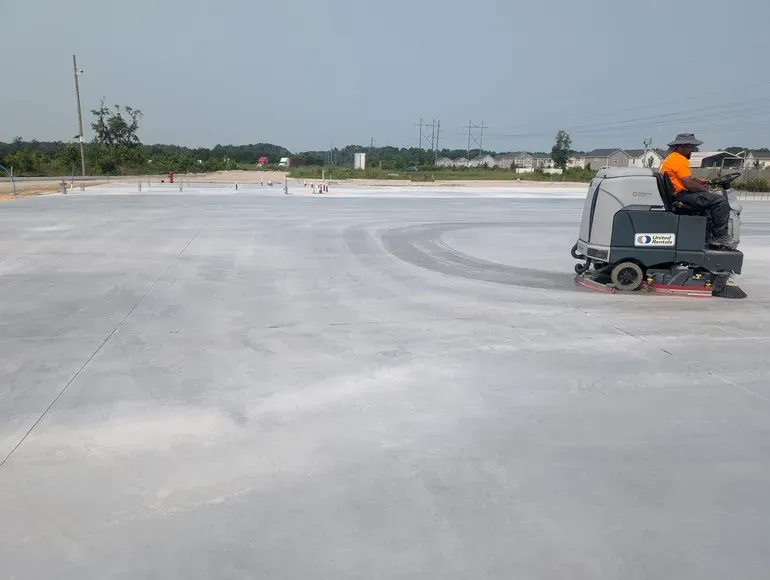
We've worked on shop floors in Greenville, Greer, Spartanburg, Mauldin, and Simpsonville. Our approach is the same every time: grind the slab properly, repair any cracks or damage, install a system rated for the chemicals and traffic your shop actually sees, and seal it for the long haul.
If you're opening a new shop, remodeling an existing one, or stuck with a failed coating from another contractor, we can walk the bays with you and give you an honest read on what your floor needs. Same goes for if you've got a single-bay shop or a 30,000 sq ft facility — we work both ends of the scale.
Get a Free Estimate for Your Greenville Auto Shop Floor
The right floor pays for itself in shop appearance, reduced liability, and not having to redo it in two years. Give Zach a call at (864) 770-8608 or reach out through our contact page to schedule a free on-site walkthrough. We'll look at your bays, talk through what you need, and send you a written estimate you can plan around.