How to Seal & Maintain a Stamped Concrete Patio in the Upstate
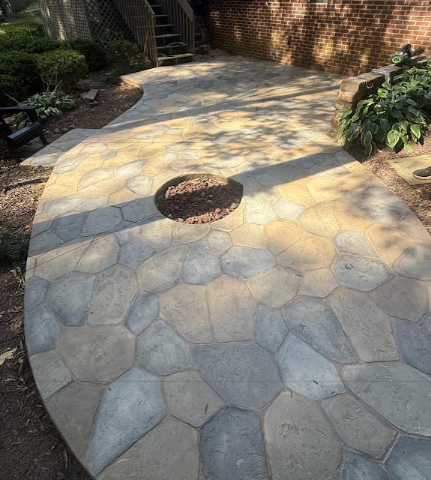
A stamped concrete patio is a durable surface, but the sealer on top of it isn't permanent — it wears down with sun, foot traffic, and weather, and once it's gone, the color and texture underneath start to fade and take on damage a lot faster. Maintaining a stamped concrete patio mostly comes down to resealing on schedule and avoiding a handful of things that break the sealer down early.
Why Sealing Matters
The sealer is what gives stamped concrete its color depth and sheen, and it's also what protects the surface from water intrusion, UV fading, and stains. Once a sealer wears thin, the concrete underneath is exposed the same way an unsealed driveway would be — it can absorb water, stain more easily, and show wear in high-traffic spots faster than a properly sealed surface would.
How Often to Reseal
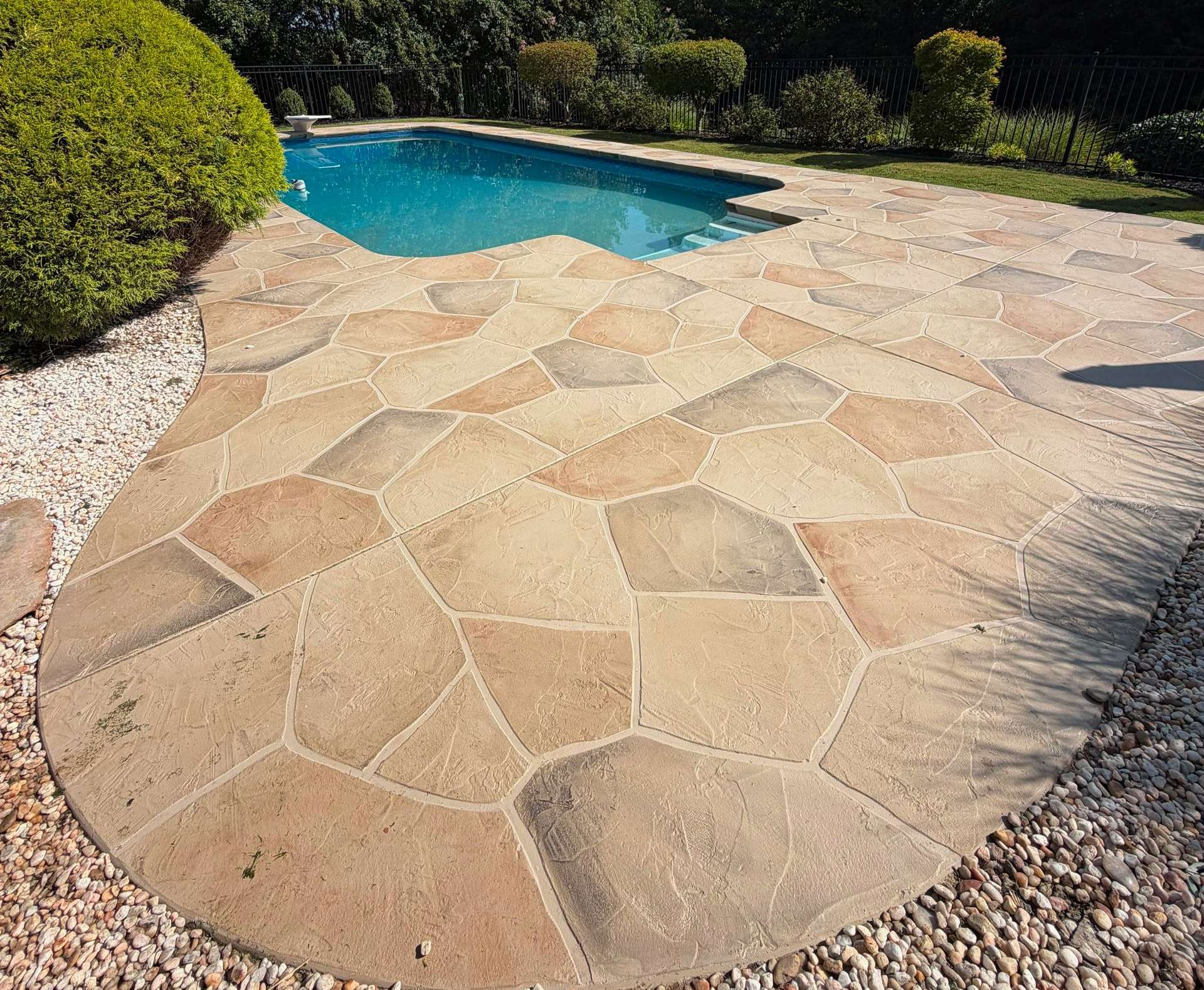
Most stamped concrete patios need resealing every two to three years, though that range shifts based on sun exposure, foot traffic, and how the patio is used. A patio that gets full sun most of the day or sees heavy use — pool decks are a common example — tends to need resealing on the shorter end of that range. A more shaded, lower-traffic patio can often go longer between coats.
Signs It's Time to Reseal
- Color looks dull, faded, or chalky compared to when it was first installed.
- Water stops beading on the surface and starts soaking in instead.
- The surface feels rougher or more porous than it used to.
- Stains — from leaves, dirt, or spills — are harder to wipe away than before.
Daily and Seasonal Care
Day to day, stamped concrete doesn't need much: sweeping off debris and rinsing with a garden hose handles most upkeep. For a deeper clean, mild soap and water with a soft-bristle brush is usually enough — avoid high-pressure washing at close range, since it can wear down the sealer faster than normal foot traffic and weather would on their own.
What to Avoid
- Deicing salts and calcium chloride products in winter — they can break down the sealer and, over time, the concrete surface underneath.
- Metal shovels for snow or ice removal — a plastic shovel is safer for the sealed surface.
- Harsh chemical cleaners not made for sealed concrete, which can strip or discolor the sealer.
- Letting standing water sit on the surface for extended periods, especially in freeze-thaw conditions.
When to Call a Pro
Resealing is a job most homeowners can hire out rather than take on themselves, especially since an uneven reseal can leave visible lap marks or an inconsistent sheen. If you're not sure whether your patio needs resealing yet, or want to know what a stamped concrete patio costs to maintain over time, that's worth asking about alongside a resealing quote.
Get a Resealing or Maintenance Quote
Zachary Daniel Concrete services stamped concrete patios, driveways, and pool decks across Greenville, Greer, Simpsonville, Easley, Spartanburg, and Piedmont. Call Zach at (864) 770-8608 or request a free estimate to find out whether your patio is due for a reseal.